Pakistan's NCCIA arrests two over fake TikTok steel-trade ads as social media marketplace scams spread
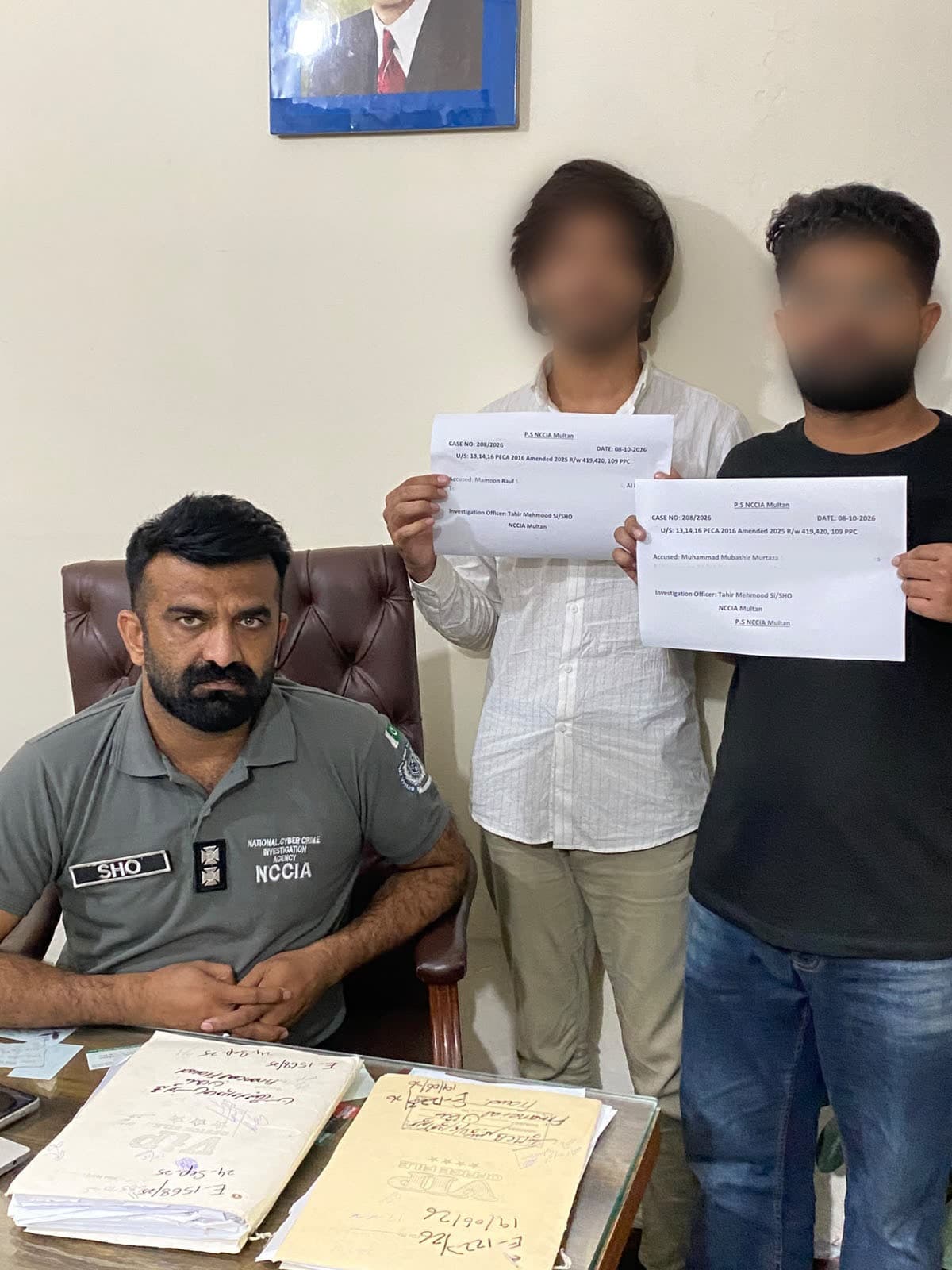
Pakistan's NCCIA Multan has arrested two men, Mamoon Rauf and Muhammad Mubashir Murtaza, accused of using a fake steel sale-and-purchase ad on TikTok to trick a buyer into transferring money into their bank accounts. Two mobile phones were recovered, and a case has been registered under PECA 2016 (amended 2025) and the Pakistan Penal Code. The case shows how TikTok ads are becoming a storefront for fake trade deals.
MULTAN: Pakistan's National Cyber Crime Investigation Agency (NCCIA) has arrested two men accused of running an online fraud through a fake steel sale-and-purchase advertisement on TikTok.
The accused
The NCCIA named the accused as:
- Mamoon Rauf
- Muhammad Mubashir Murtaza
Case No. 208/2026 was registered at the NCCIA Multan police station on 8 October 2026.
It covers Sections 13, 14 and 16 of the Prevention of Electronic Crimes Act (PECA) 2016, as amended in 2025, which deal with electronic forgery, electronic fraud and misuse of identity information.
These are read with Sections 419, 420 and 109 of the Pakistan Penal Code, on cheating by impersonation, cheating and abetment.
The investigating officer is Sub-Inspector and Station House Officer Tahir Mehmood.
Two mobile phones were recovered, and the investigation is continuing.
How the TikTok ad scam worked
According to the NCCIA, the accused posted an advertisement on TikTok offering steel for sale and purchase.
When the complainant responded, they persuaded the victim to transfer money into their bank accounts as payment for the steel deal.
No steel was delivered.
Fake trade ads on short-video platforms
The case follows a fast-growing pattern.
Scammers use TikTok ads and posts to pose as suppliers of steel, cement, solar panels, vehicles and other high-value goods.
Short videos of warehouses, stock piles or delivery trucks, often copied from genuine businesses, make the offer look real.
Prices are set just below market rates to rush buyers into paying an advance.
Once the money reaches a bank or mobile wallet account, often a mule account, the seller disappears.
Small traders, contractors and first-time online buyers are the main targets, because bulk-goods deals are often done on trust and paid in advance.
In Pakistan, where TikTok is one of the most used platforms, these ads reach large audiences at very little cost to scammers.
Red flags for buyers
- Bulk goods priced well below market rates
- Sellers who insist on full advance payment before delivery or inspection
- Payment requested into personal accounts rather than a registered business account
- No verifiable business address, tax registration or trade references
- Pressure to close the deal quickly
Victims in Pakistan can report online fraud to the NCCIA at nccia.gov.pk or [email protected].