Pakistan's NCCIA arrests four in Islamabad for blackmailing woman with intimate images, a strong step for women's online safety
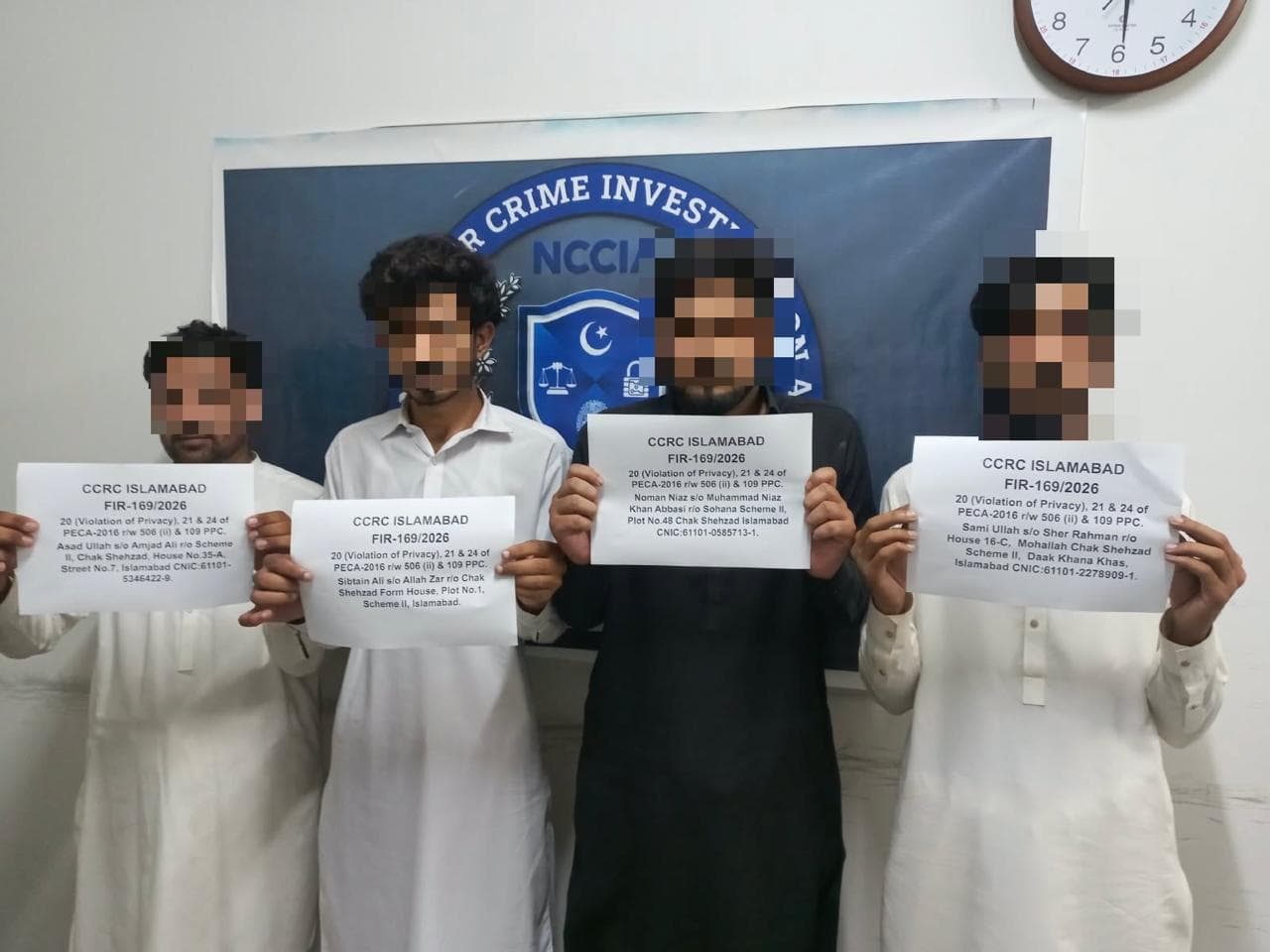
Pakistan's NCCIA Islamabad has arrested four men, Asad Ullah, Sibtain Ali, Noman Niaz and Sami Ullah, accused of harassing and blackmailing a woman by sharing objectionable images and videos of her with her family and in WhatsApp groups. Four phones were recovered. The swift action under PECA 2016 sends a clear message that image-based abuse of women will be pursued and punished.
ISLAMABAD: Pakistan's National Cyber Crime Investigation Agency (NCCIA) has arrested four men accused of harassing and blackmailing a woman with objectionable images and videos.
The swift action is a welcome sign that image-based abuse, one of the most damaging forms of online violence against women, is being taken seriously.
The accused allegedly shared the victim's private content with her family and spread it through WhatsApp groups without her consent.
NCCIA officers recovered four mobile phones during the operation.
A case has been registered and the investigation is continuing.
The suspects
FIR No. 169/2026 was registered at the Cyber Crime Reporting Centre (CCRC), Islamabad.
The suspects named are:
- Asad Ullah, son of Amjad Ali, of Chak Shehzad, Islamabad
- Sibtain Ali, son of Allah Zar, of Chak Shehzad, Islamabad
- Noman Niaz, son of Muhammad Niaz Khan Abbasi, of Chak Shehzad, Islamabad
- Sami Ullah, son of Sher Rahman, of Chak Shehzad, Islamabad
Modus operandi
According to the NCCIA, the accused obtained objectionable images and videos of the victim and used them to harass and blackmail her.
When the pressure failed, they sent the material to her family and circulated it in WhatsApp groups, multiplying the harm with every share.
Cases like this usually follow a familiar pattern.
The abuser gets intimate content through a relationship, a hacked phone or cloud account, a secretly recorded video call, or a doctored image.
The victim is then threatened with exposure unless she pays money, sends more content or does what the abuser demands.
Messaging groups are used to shame the victim publicly and to put pressure on her through her family, a tactic that is especially effective where family honour carries heavy social weight.
Legal sections and penalties
The FIR invokes the Prevention of Electronic Crimes Act (PECA) 2016 and the Pakistan Penal Code (PPC):
- PECA Section 20 (dignity and privacy of a person): Knowingly sharing false or harmful information that intimidates or harms a person's reputation or privacy. Up to three years in prison, a fine of up to PKR 1 million, or both.
- PECA Section 21 (modesty of a person): Sharing or threatening to share sexually explicit images or videos of a person without consent, or using them to blackmail. Up to five years in prison, a fine of up to PKR 5 million, or both, with higher penalties where the victim is a minor.
- PECA Section 24 (cyberstalking): Using information systems to harass, monitor or intimidate a person, or to send or spread their images without consent. Up to three years in prison, a fine of up to PKR 1 million, or both, with higher penalties where the victim is a minor.
- PPC Section 506(ii) (criminal intimidation): Threats to cause serious harm or to damage a woman's honour. Up to seven years in prison, a fine, or both.
- PPC Section 109 (abetment): Anyone who helps or encourages the crime faces the same punishment as the main offender.
Why it matters
Image-based abuse destroys lives.
It drives victims into isolation and sometimes self-harm, and many women never report it out of fear of shame.
Quick arrests, named suspects and serious charges show victims that coming forward works.
Women facing online harassment or blackmail in Pakistan can report it to the NCCIA at nccia.gov.pk or [email protected].
Victims should not pay or comply with demands, should keep screenshots and chat records as evidence, and should report the accounts to the platform.