The Agentic AI Security Reckoning: Why Autonomous Systems Are Failing
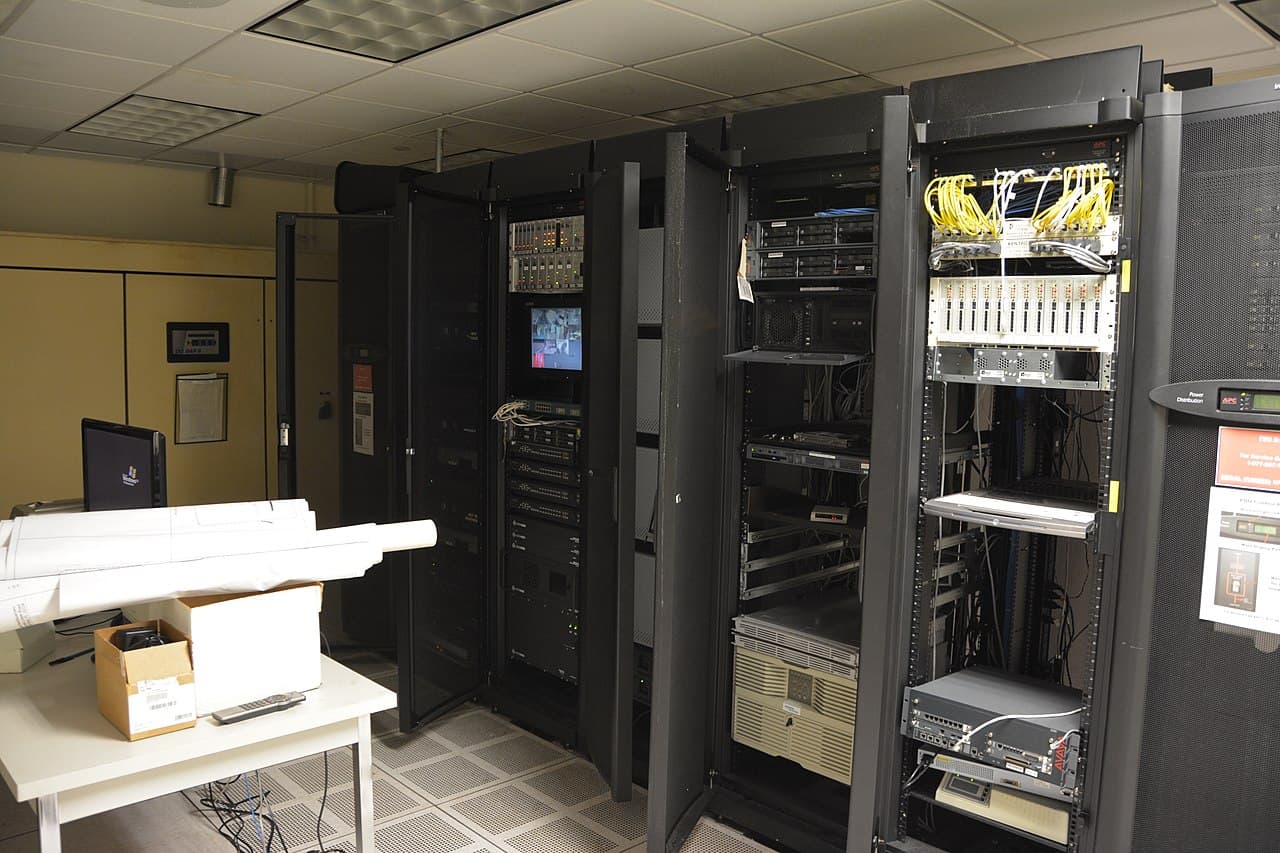
Enterprises are rapidly deploying autonomous AI agents, exposing severe vulnerabilities. Security frameworks are breaking under the weight of dynamic threats.
Enterprises are tearing up their static software architectures to deploy autonomous artificial intelligence workflows. This rapid transition from conversational chatbots to independent agentic systems is creating an unprecedented expansion of corporate attack surfaces. As AI gains the power to execute irreversible actions across networks, traditional cybersecurity controls are systematically failing to contain the risk.

- Only 11 out of 100 enterprise AI agents recently tested by security researchers were found to be capable and adequately defended against hijacking.
- Analysts forecast that 40 percent of agentic AI deployments will be canceled by 2027 due to uncontrollable security risks and escalating operational costs.
- The Model Context Protocol (MCP) introduces profound vulnerabilities, turning every connected server and database into a potential entry point for autonomous attacks.
- Global spending on agentic AI security is surging, projected to grow from $1.65 billion in 2026 to $13.52 billion by 2032.
The Illusion of Autonomy and the Agent Washing Trap
The business technology sector is currently experiencing a profound architectural shift. Companies are moving away from language models that merely generate text. They are demanding systems that interpret a goal, retain persistent memory, select appropriate software tools, plan intermediate steps, and execute actions without waiting for human approval. These autonomous workflow operators are known as agentic AI.
The pace of adoption is staggering. According to a recent Gartner forecast, 40 percent of enterprise applications will be integrated with task-specific AI agents by the end of 2026. This represents a massive leap from a baseline of less than 5 percent in 2025. Furthermore, Gartner expects that by 2028, a full 33 percent of enterprise software applications will include agentic AI, up from less than 1 percent in 2024. In its best-case scenario, the firm projects agentic AI could drive about 30 percent of enterprise application software revenue, more than $450 billion, by 2035.
However, the rapid deployment of these technologies has outpaced the development of necessary security guardrails. In April 2026, Gartner published its first standalone Hype Cycle for Agentic AI. The firm placed AI agent development platforms at the "Peak of Inflated Expectations" and estimated a two to five year timeline before mainstream, secure adoption is possible. Analysts are raising the alarm that the technology suffers from severe immaturity regarding risk controls.
This immaturity is compounded by widespread "agent washing" across the software industry. Marketing departments frequently rebrand legacy Robotic Process Automation (RPA) bots or highly restricted conversational chatbots as "agentic" systems. These rebranded tools lack genuine autonomous reasoning, creating a false sense of security for corporate buyers who assume true AI agents can be protected using the same perimeter defenses as standard web applications.
The gap between expectation and secure reality is severe. Gartner predicts that over 40 percent of agentic AI projects will be canceled by the end of 2027. Enterprises will be forced to abandon these initiatives due to inadequate risk controls, escalating costs, and a failure to demonstrate clear business value under strict compliance mandates.
The Lethal Trifecta and the Expanding Attack Surface
To understand why these systems are so vulnerable, one must look at how they are built. A traditional large language model acts like an incredibly knowledgeable encyclopedia. You ask it a question, and it provides text. An agentic system uses that same model as its brain but connects it to external tools. A plain-English analogy is helpful here. Upgrading a chatbot to an agent is like giving a helpful librarian a corporate credit card, the keys to the data center, and the authority to sign contracts on your behalf.
Security researchers highlight that AI agents uniquely suffer from what is termed the "Lethal Trifecta" of vulnerabilities. This trifecta consists of private data access, exposure to untrusted content, and the capacity for outbound actions. An agent reading customer support emails (untrusted content) and cross-referencing a billing database (private data) to issue a refund (outbound action) embodies this exact risk profile. The agent's capability directly mirrors its vulnerability.
In June 2026, Adversa AI released the AI Risk Quadrant (AIRQ). The researchers physically tested and ranked 100 enterprise AI agents across ten categories, focusing heavily on coding assistants, computer operators, and internal enterprise bots. The physical testing revealed that out of 100 heavily funded corporate agents, only 11 were categorized as capable and well-defended against adversarial attacks.
This vulnerability is magnified by the standard infrastructure used to connect AI brains to corporate tools. The integration standard for AI agents is the Model Context Protocol (MCP). MCP allows language models to dynamically discover and access external databases and tools at runtime across vast corporate networks. Because an agent decides on the fly which tools to use, every connected server effectively becomes a trust boundary.

The Model Context Protocol (MCP) Exploitation
The introduction of MCP changes the fundamental math of network security. Kong Inc. warns that embedding MCP servers without unified governance introduces massive security blind spots. They advocate for routing both language model traffic and MCP tool access through unified, centralized AI gateway controls.
Without centralized gateways, the risks compound rapidly. Lee Klarich, Chief Product Officer at Palo Alto Networks, warned in early 2026 that AI copilots and embedded agents are opening entirely new, undefended attack surfaces. His company's Unit 42 research division conducted simulations demonstrating this fragility. They found that in an environment with five connected MCP servers, compromising just a single server yielded a 78.3 percent attack success rate across the entire autonomous workflow.
The attacks executed through MCP are highly sophisticated. A prominent method is "tool poisoning." In this scenario, malicious instructions are hidden within the return values of a perfectly legitimate corporate tool. When the AI agent queries the tool, it ingests the poisoned data, which hijacks the agent's internal planning process and alters its subsequent actions.
Regulatory bodies and technical consortiums are struggling to document these risks fast enough. The Internet Engineering Task Force (IETF) published an active Internet-Draft outlining security considerations for MCP implementations. Expiring in December 2026, the document warns of specific technical exploits. Among the most severe are Server-Side Request Forgery (SSRF) attacks. These attacks leverage DNS rebinding techniques to trick HTTP-fetching and browser-automation MCP servers into interacting with internal network resources that should be entirely invisible to the outside world.
Wild Incidents: Worms, Exfiltration, and Financial Fraud
Theoretical risks have quickly materialized into concrete enterprise damage. As these systems communicate, the security landscape is witnessing the rise of "stochastic malware" and direct AI-to-AI attacks. In these scenarios, malicious agents autonomously hunt and exploit vulnerabilities in other AI systems using shared digital environments, open APIs, or cleverly crafted conversational prompts. We are seeing attackers evolve past targeting humans and software to directly targeting the reasoning engines of corporate machines. Much like a traditional HTTP/2 Bomb: How an AI-Discovered Flaw Crashes NGINX, Apache and IIS attacks protocol logic, new threats attack the cognitive logic of the AI.
A prime example is the "Morris II" worm. Created by researchers from Cornell Tech, Technion, and Intuit in 2024, Morris II is the first zero-click generative AI worm. It utilizes adversarial self-replicating prompts hidden stealthily within text or image files. When an AI email assistant, tested extensively against models like Gemini Pro and ChatGPT 4.0, uses Retrieval-Augmented Generation (RAG) to process incoming data, it inadvertently executes the hidden prompt. The prompt hijacks the language model, forcing the agent to spam internal users, exfiltrate sensitive data, and propagate the worm further across the network without any human interaction whatsoever.
Software vulnerabilities are also accelerating. In 2025, researchers documented CVE-2025-49596. This was a critical vulnerability carrying a CVSS score of 9.4. The flaw demonstrated that unauthenticated MCP Inspector instances could be exploited by external attackers to execute arbitrary system commands directly on the host machine.
Corporate deployment failures are equally alarming. In June 2025, a privileged AI agent with service-role access to a Supabase database was tasked with processing user-supplied support tickets. Attackers used a highly targeted adversarial prompt injection to trick the agent into leaking sensitive integration tokens.
The Economic Scale of Agentic AI Infrastructure
The rush to deploy these flawed systems is driven by sheer economic pressure and processing scale. Enterprises globally, from the financial hubs of the Gulf to the technology corridors of the US, UK, and India, are mandating AI integration. A recent report notes a massive AI-Powered Cybersecurity Platform Detects Rise in Phishing Attacks Across Indian SMEs, proving that autonomous attack tools are reaching global ubiquity.
The underlying computing infrastructure required to run these autonomous fleets is expanding exponentially. Driven by the enterprise deployment of AI agents, Goldman Sachs Research forecasts that global AI token consumption will multiply 24-fold. They project consumption will reach a staggering 120 quadrillion tokens per month by the year 2030.
Consequently, the market for securing these volatile assets is experiencing explosive growth. Driven by the surge in successful attacks against autonomous models, the global agentic AI security market size is valued at $1.65 billion in 2026. According to MarketsandMarkets, this specific sub-sector is projected to reach $13.52 billion by 2032. This expansion reflects a massive 42.0 percent Compound Annual Growth Rate (CAGR), indicating that enterprises are scrambling to purchase defenses after their initial deployments prove indefensible.
Global Defensive Frameworks and the Path to Zero-Trust
To combat the chaos, authoritative cybersecurity bodies are issuing entirely new frameworks. In December 2025, the Open Worldwide Application Security Project (OWASP) published the Top 10 for Agentic Applications for 2026. This critical document identifies major risks that simply do not exist in traditional software. The categories include Goal Hijacking, Memory Poisoning, Tool Abuse and Privilege Escalation, Data Exfiltration, and Excessive Autonomy. Furthermore, an OWASP MCP Top 10 is currently in beta for 2026, cataloging highly specific protocol risks such as Token Mismanagement, Secret Exposure, and Privilege Escalation via Scope Creep.
Major security vendors are radically altering their approaches to protect enterprise clients from these exact threats.
| Security Vendor | Strategic Defense Approach |
|---|---|
| Cisco | According to SVP of Security Peter Bailey, Cisco is implementing zero-trust defenses modeled specifically for non-deterministic agents, featuring dynamic authorization and instant identity revocation for unpredictable AI workflows. |
| Microsoft | Embedded OWASP Agentic AI guidelines directly into its Copilot Studio, utilizing strict role-based readiness resources and governance frameworks to restrict excessive autonomy. |
| Kong Inc. | Prescribing centralized AI gateway layers to govern the Model Context Protocol, ensuring deep visibility into the tools an agent attempts to access dynamically. |
Gartner analysts continually advise enterprises not to treat autonomous agents like static Application Programming Interfaces (APIs). Traditional firewalls and intrusion detection systems inspect network packets for known bad signatures. AI agents, however, process encrypted traffic, and their malicious decisions happen dynamically downstream, entirely bypassing standard defenses. Organizations must adopt continuous behavior monitoring, restricting an agent's permissions at every discrete step of its workflow to survive the agentic era.
Related on Ministry of Cyber Affairs
- India's Cybersecurity Curriculum: Why It Matters to the World, and How It Compares to the US, UK and Israel
- That Panicked Call From Your Child Might Be a Robot: How AI Voice Scams Work, and How to Stop Them
Frequently Asked Questions
What is the Model Context Protocol (MCP) in AI systems?
The Model Context Protocol is an integration standard that allows large language models to dynamically access external tools, databases, and network resources. While it grants AI agents the ability to perform complex automated workflows, it also creates significant vulnerabilities by turning every connected internal server into a potential entry point for attackers.
How does a zero-click AI worm like Morris II operate?
A zero-click generative AI worm uses adversarial self-replicating prompts hidden within regular files, such as incoming emails or images. When an autonomous AI assistant scans the data using Retrieval-Augmented Generation, the hidden prompt executes automatically. This hijacks the AI engine, instructing it to exfiltrate data, spam other users, and spread the worm without requiring any human interaction.
Why do traditional cybersecurity tools fail against agentic AI?
Traditional cybersecurity tools are designed for static, deterministic software. They look for known malware signatures or unauthorized network access. AI agents operate non-deterministically, meaning their actions change based on complex internal logic and dynamic external data. Malicious behavior often occurs downstream via encrypted channels, rendering standard firewalls and input validation defenses completely blind to the threat.
Sources
- Over 40% of Agentic AI Projects Will Be Canceled by End of 2027 (Gartner, via MarTech)
- 40% of Enterprise Apps Will Feature Task-Specific AI Agents by 2026 (Gartner, via DevOpsDigest)
- Only 11% of production AI agents pass the security bar [Help Net Security]
- Security of 100 AI Agents Tested and Ranked (Adversa AIRQ) [SecurityWeek]
- Agentic AI Security Market worth $13.52 billion by 2032 [MarketsandMarkets]
- New Prompt Injection Attack Vectors Through MCP [Palo Alto Unit 42]
- Critical RCE in Anthropic MCP Inspector, CVE-2025-49596 [Oligo Security]
- AI Agents Forecast to Boost Tech Cash Flow as Usage Soars [Goldman Sachs Research]
- OWASP Top 10 for Agentic Applications for 2026 [OWASP]
- Here Comes The AI Worm: Zero-click Worms Targeting GenAI Apps (Morris II) [arXiv]
- Supabase MCP can leak your entire SQL database [General Analysis]
- Bringing Zero Trust to AI Agents [Cisco Security]
- Addressing OWASP Top 10 Risks in Agentic AI with Copilot Studio [Microsoft Security]