The 2026 Deepfake Fraud Economy: Why Detection Failed
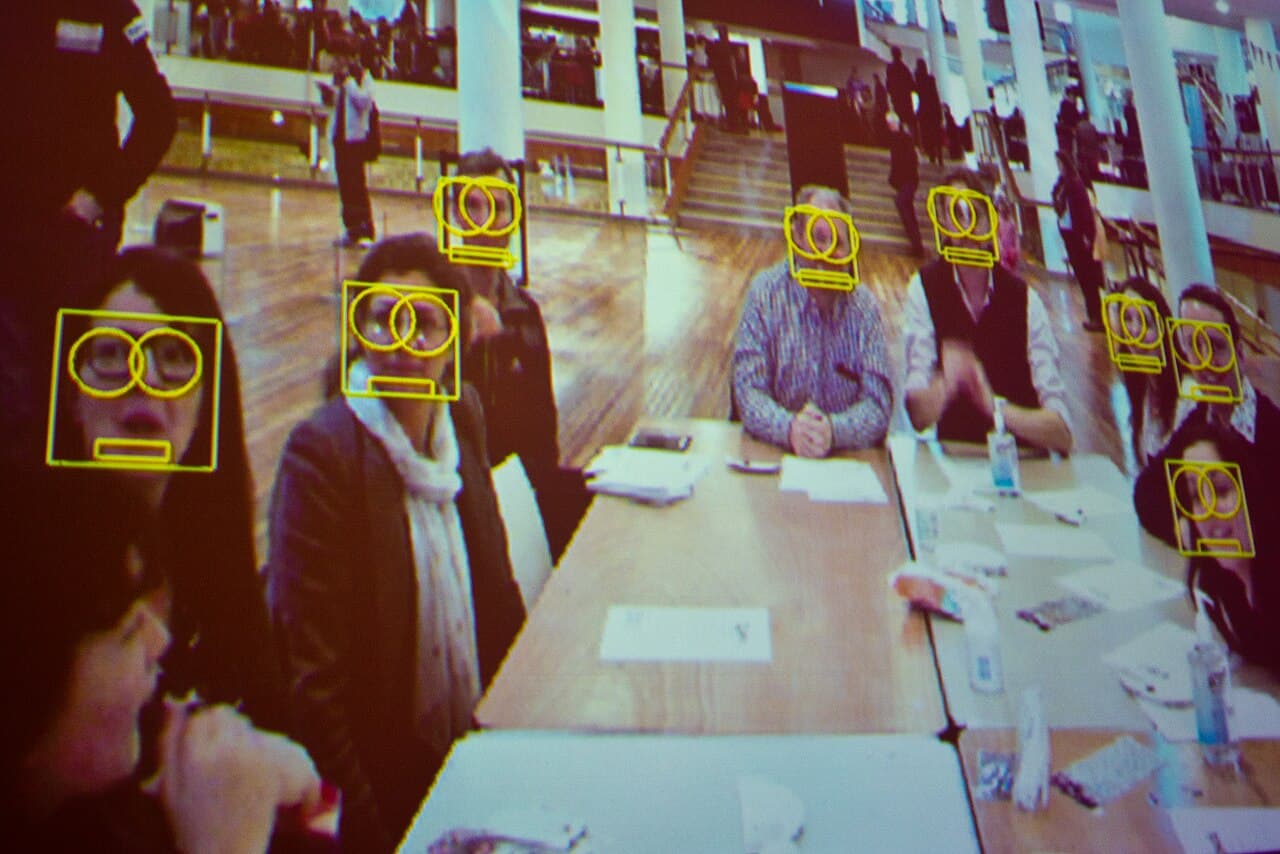
In 2026, deepfake fraud accounts for 11% of global fraudulent activity. Human visual detection has failed, forcing a transition to continuous authentication.
The global financial ecosystem has crossed a critical threshold of trust. By the middle of 2026, synthetic media attacks have matured from experimental novelties into industrialized financial weapons. Deepfake fraud currently accounts for 11% of all global fraudulent activity, fundamentally altering how corporations, governments, and ordinary citizens verify identity. The sheer volume of synthetic files discovered online has exploded, growing from approximately 500,000 in 2023 to an estimated 8 million in 2025. This exponential expansion confirms that synthetic identity is no longer an edge case. It has become the core infrastructure of modern cybercrime.
- Deepfake fraud now accounts for 11% of all global fraudulent activity.
- Underground markets sell complete synthetic identity kits for as little as five dollars.
- US losses from deepfake fraud tripled to $1.1 billion in 2025.
- Human detection accuracy is near zero, forcing reliance on continuous behavioral authentication.
The defense sector is racing to catch up. On June 2, 2026, Google announced the rollout of an industry-first "fake call detection" feature for Android devices. This system actively flags and intercepts AI-voice cloning scams targeting personal contacts. However, at the enterprise level, the challenges are vastly more complex. Identity verification networks are reporting a 783% spike in digital injection attacks against face liveness systems in a single year. A digital injection attack occurs when an attacker bypasses the camera lens entirely, feeding a pre-recorded or live-generated synthetic video directly into the application's data stream. This mechanism defeats traditional security checks and forces organizations to rethink how they establish trust.

- The Industrialization of Deepfake-as-a-Service
- The Financial Scale of Synthetic Theft
- The Collapse of Traditional Biometrics
- Real Incidents and Strategic Defense
- What Google, OpenAI, and Anthropic Are Doing About It
- When Deepfakes Reach the Courts
- The Law Catches Up: Deepfake Rules in 2026
- How to Protect Yourself and Your Company
- Related on Ministry of Cyber Affairs
- Frequently Asked Questions
The Industrialization of Deepfake-as-a-Service
The rapid escalation of synthetic fraud is driven by a fundamental shift in the cybercriminal supply chain. The underground market has transitioned to a commoditized Deepfake-as-a-Service model. Think of this model like a modern franchise business. You do not need to invent the recipes or design the storefront. You simply pay a licensing fee, follow the instruction manual, and begin operations. This ecosystem directly mirrors Ransomware-as-a-Service, complete with affiliate programs, dedicated customer support desks, and formalized revenue sharing agreements.
Technical barriers to entry have vanished entirely. Attackers no longer require any coding or machine learning skills to execute sophisticated campaigns. Complete synthetic identity kits are currently sold on dark web forums for as little as five dollars. The efficiency of these tools is staggering. Voice cloning technology now requires only 3 to 10 seconds of clean audio to produce a highly convincing replica. Furthermore, high-fidelity videos can be synthesized from just a handful of publicly available social media photographs.
The operational capacity of these attacks is multiplying through automation. Autonomous AI agents are now capable of independently running multi-step, ongoing impersonation campaigns across chat, email, and voice channels without human assistance. This enables a single operator to target thousands of victims simultaneously, a dynamic we explore in depth in our analysis on The Agentic AI Security Reckoning: Why Autonomous Systems Are Failing. Furthermore, attackers are weaponizing synthetic media beyond simple theft. They are executing a strategy known as "reframing", fabricating words and actions to intentionally ruin executive reputations and manipulate corporate stock prices. By releasing a synthetic video of a CEO making disastrous statements right before earnings calls, criminals can short the stock and profit from the engineered panic.
The Financial Scale of Synthetic Theft
The financial devastation wrought by this technology is operating at a scale previously reserved for nation-state economic warfare. The Deloitte Center for Financial Services projects that AI-enabled fraud in the United States will hit $40 billion annually by 2027. We are already seeing the precursors to this massive wealth transfer. US losses from deepfake fraud reached $1.1 billion in 2025. This represents a staggering acceleration, effectively tripling from the $360 million recorded in 2024.

This velocity is sustained on a global basis. The World Economic Forum recorded more than $200 million in deepfake-related fraud losses globally in the first quarter of 2025 alone. The cryptocurrency sector remains uniquely vulnerable due to its reliance on digital trust and rapid transaction finality. A comprehensive 2024 crypto scam analysis documented $4.6 billion in losses, significantly driven by AI-generated impersonations of prominent exchange executives guiding victims into fraudulent contracts. This massive industrialization of theft is exactly what we analyzed in Inside the $75 Billion Machine: How Pig-Butchering Investment Scams Became the World's Fastest-Growing Cyber Fraud.
At the core of these financial losses is a fundamental biological limitation. Human beings cannot detect high-quality synthetic media. According to Veriff's 2026 US Deepfakes Report, the general public's deepfake detection accuracy score sits at an abysmal 0.07 out of 1.0. This metric indicates that relying on human visual verification is practically worse than a random coin flip. Organizations that still train employees to spot visual artifacts, unnatural blinking, or audio glitches are fighting a war that ended years ago. The attackers have refined the models past the point of human perception.
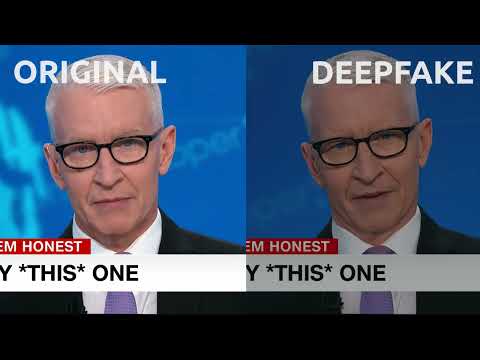 ►
►The Collapse of Traditional Biometrics
As human detection fails, the burden has shifted entirely to automated security layers. Unfortunately, static biometrics are collapsing under the pressure. The security vendor Pindrop recently discovered that 1 in 6 of its own internal job applications exhibited signs of fraud. Candidates were actively deploying deepfakes to pass live video interviews, simulating technical expertise and professional backgrounds. This finding has spurred the rapid development of continuous identity authentication protocols that analyze behavior over time rather than relying on a single snapshot.
The threat is fundamentally altering enterprise security architectures. Global enterprise surveys from identity verification provider Regula indicate that 49% of businesses experienced audio and video deepfake fraud incidents in 2024. This volume is forcing the industry to abandon static Know Your Customer protocols, which typically rely on comparing a static ID to a selfie. Instead, organizations are transitioning to continuous behavioral analysis, measuring how an entity interacts with a system rather than just what they look like.
| Static KYC Defenses | Continuous Authentication |
|---|---|
| Relies on point-in-time ID and selfie scans. | Monitors behavioral signals across the entire session. |
| Highly vulnerable to digital injection attacks. | Detects camera bypasses and anomalous network routing. |
| Dependent on human visual verification. | Operates autonomously via automated TrustOps protocols. |
Authoritative security bodies are sounding the alarm regarding these technical vulnerabilities. The National Institute of Standards and Technology launched the "GenAI: Deepfakes 2026" challenge after issuing a severe warning. Independent benchmarking (the DeepFake-Eval-2024 study) shows that commercial AI detection systems experience a massive 45 to 50 percent performance degradation when transitioning from academic datasets to real-world operational environments. To correct this, NIST is now producing adversarial benchmarks using entirely synthetic subjects. Furthermore, according to Gartner predictions reported by SC Media, 30% of enterprises will consider standalone facial biometrics fundamentally unreliable by 2026 specifically due to AI-injection attacks.

Real Incidents and Strategic Defense
The theoretical risks of synthetic media have fully materialized into devastating real-world financial losses. In January 2026, the Bombay Stock Exchange faced a sophisticated manipulation campaign. A hyper-realistic deepfake of BSE CEO Sundararaman Ramamurthy was broadcast extensively on social media. The video was designed to trap retail investors into fraudulent WhatsApp investment groups, simulating an official endorsement. The attack was so convincing that the exchange was forced to issue four separate public warnings to contain the fallout.
This manipulation builds upon previous landmark incidents. In 2024, a multinational company in Hong Kong suffered a massive breach when a finance worker authorized a $25 million wire transfer. The worker had participated in a video call entirely populated by deepfaked replicas of the company's CEO and peers. Even earlier, in 2021, cybercriminals executed a highly sophisticated Chinese tax fraud operation. They purchased high-definition photographs online to render deepfakes that successfully defeated government facial recognition systems, resulting in the theft of $75 million via fake tax invoices. These incidents prove that synthetic media can reliably bypass both human scrutiny and algorithmic verification.
To combat this, the strategic defense posture is shifting. According to Gartner forecasts featured in Forbes, 40% of government organizations will establish dedicated "TrustOps" functions by 2028. These units are designed explicitly to counter Disinformation-as-a-Service platforms. The OWASP GenAI Security Project has reinforced this shift. In their "Guide for Preparing and Responding to Deepfake Events", OWASP explicitly advises enterprises to stop relying on visual or auditory detection training. The directive is clear: defense must now rely entirely on strict process adherence and rigorous out-of-band financial controls. If a synthetic CEO orders a wire transfer over video, the payment must be verified through a secondary, non-digital channel.
What Google, OpenAI, and Anthropic Are Doing About It
The companies building the generators are also racing to label what those generators make. Their shared bet is provenance: cryptographically tag or invisibly watermark AI content at the moment it is created, so a platform or a person can later check where it came from. In May 2026 the two largest image labs aligned on a single approach, pairing the C2PA "Content Credentials" standard, which records an asset's origin in its metadata, with Google's SynthID, an invisible watermark baked into the pixels and audio that is built to survive screenshots, compression, and light edits. The urgency shows in Google's own research, which found people correctly identify a high-quality deepfake video only about a quarter of the time.
| Company | What it is doing about deepfakes |
|---|---|
| SynthID watermarks AI content from Gemini and Google's image and audio models. Google says it has marked over 100 billion images and videos, plus the equivalent of 60,000 years of audio. At Google I/O 2026 it announced that C2PA verification and SynthID detection are coming directly into Google Search and Chrome: a user can ask “Is this made with AI?” in Lens, AI Mode, Circle to Search, or Gemini in Chrome to check whether an image or video was AI-generated, and verify C2PA credentials to see if a photo is an unaltered camera original or was edited. Google also said OpenAI, ElevenLabs, and Kakao will adopt SynthID, widening the pool of traceable content. | |
| OpenAI (ChatGPT, Sora, DALL-E) | Attaches C2PA Content Credentials to images from DALL-E 3 and Sora, and in May 2026 joined the C2PA steering committee and began embedding Google's SynthID watermark alongside that metadata on images from ChatGPT, Codex, and its API. It is previewing a public tool to verify whether an image was made by its systems. Researchers have flagged that the labelling is not always applied consistently, for instance on some downloaded Sora video. |
| Anthropic (Claude) | Claude does not generate images or video, so it cannot produce visual deepfakes in the first place. Anthropic's defense is its Usage Policy, which prohibits deceptive and impersonation uses: it bars building chatbots that impersonate real people and bans targeted political campaigning, with violations leading to warnings and loss of access. Claude is positioned to help analysts investigate synthetic-media attacks rather than create them. |
The honest limit of all this: provenance only marks the output of tools that choose to participate. A criminal cloning a CEO's voice or building a fake video-call "CFO" will reach for open-source or unbranded models that carry no watermark and no credential. Watermarking makes legitimate AI content verifiable; it does not make malicious deepfakes detectable. The labs themselves frame C2PA-and-SynthID as provenance-first verification, not a magic detector, useful only alongside source history, forensics, and human judgment.
How a watermark like SynthID actually works
SynthID does not stamp a visible logo. For images, a neural network nudges pixel values in a faint pattern spread across the whole picture, invisible to the eye but readable by a matching detector, and built to survive cropping, compression, colour changes, and screenshots. For audio, it hides an inaudible signal inside generated speech and music. For text, it subtly biases which words the model picks, a method called tournament sampling, so the choice pattern itself carries the mark. The hard physical limit: no watermark survives someone simply filming a high-resolution screen with a phone, which is exactly how many scam clips are re-captured and re-shared.
Google and OpenAI are not acting alone. The underlying provenance standard, C2PA, is backed by a coalition that includes Adobe, Microsoft, Meta, Amazon, Sony, Nikon, the BBC, Intel, and Truepic. Adobe has wired Content Credentials through Creative Cloud; Meta shows an “AI Info” label on Facebook and Instagram when a file's manifest says it was AI-made; ElevenLabs hides inaudible watermarks in its generated voices and offers a free classifier to detect them; and camera makers such as Sony and Nikon are beginning to sign photos as authentic at the moment of capture.
 ►
►When Deepfakes Reach the Courts
As the fraud has scaled, so has the litigation, and a body of celebrity and likeness law is forming in real time, led from an unexpected place: India.
India: the personality-rights wave
Delhi's High Court has become the world's busiest forum for AI-likeness injunctions. In 2023 it protected Amitabh Bachchan's name, image, and distinctive voice, and ruled for Anil Kapoor, shielding even his catchphrase "Jhakaas" from AI exploitation. Jackie Shroff won similar protection in 2024. The wave then crested: in late 2025 NTR Jr., R. Madhavan, and Shilpa Shetty secured orders, and on 29 May 2026 the court restrained the misuse of Varun Dhawan's name, face, and voice across AI, generative AI, deepfakes, AI chatbots, and face-morphing tools. The judges have been blunt: AI-generated impersonation falls squarely within the law on misappropriation, and once notified, platforms must take it down fast.
United States: the right of publicity meets AI
America is fighting the same battle through its state-by-state "right of publicity" laws. When OpenAI launched a ChatGPT voice called "Sky" that sounded like Scarlett Johansson, who had declined to license her voice, she threatened to sue and OpenAI pulled it, an echo of a 1988 ruling that punished Ford for imitating singer Bette Midler. The estate of comedian George Carlin sued the makers of an AI-generated "Carlin" comedy special and settled in 2024. And Tennessee passed the ELVIS Act (Ensuring Likeness, Voice and Image Security), the first US law written specifically to stop AI voice-cloning of performers, living or dead.
The twist: deepfakes inside the courtroom
The danger now runs the other way too. In September 2025 a California court threw a case out entirely, with prejudice, after finding a party had filed AI-fabricated evidence, the first time a civil court imposed its harshest sanction over a deepfake. Synthetic media has started to corrupt not just commerce, but the justice system meant to police it.
The Law Catches Up: Deepfake Rules in 2026
Technology is only half the response. In 2026 governments moved from debating deepfakes to legislating them, and the common thread is a shift from proving harm to proving consent and provenance.
| Region | What the law now requires |
|---|---|
| European Union | The AI Act (Article 50) requires AI-generated or substantially manipulated content to be clearly disclosed and machine-detectable, with full compliance due by August 2026. Penalties reach up to €35 million or 7% of global turnover. |
| United States | The DEFIANCE Act, passed by the Senate in January 2026, lets victims of non-consensual sexual deepfakes sue creators, distributors, and knowing hosts for up to $150,000 (or $250,000 when tied to assault, stalking, or harassment). The TAKE IT DOWN Act and a wave of state laws add criminal penalties and rapid-removal duties. |
| China | The Deep Synthesis Provisions (in force since 2023) require consent and identity verification to depict real people, mandatory visible labels and watermarks on synthetic media, and ban content judged harmful to social order. |
| India | The IT Amendment Rules 2026 (in force since February) regulate “synthetically generated information”: mandatory AI labelling and a compressed three-hour takedown window for flagged content, down from 36 hours. |
| Denmark | A first-of-its-kind copyright bill gives citizens ownership of their own face, voice, and body, so an unconsented deepfake is an infringement regardless of how it is used, the first country to fight deepfakes through copyright. |
The gap is enforcement. A disclosure label or a watermark only protects anyone if the platform showing the content actually checks for it, and the criminals running voice-clone and fake-CFO scams are precisely the people who will never label their work.
How to Protect Yourself and Your Company
The detection technology is losing the per-pixel arms race, so the practical defense has shifted to process: assume a face or a voice can be faked, and verify every high-stakes request through a channel the attacker does not control.
- Verify on a second channel. Hang up and call the person back on a number you already know. Never act on the same call that made the request.
- Agree a code word with your family and your finance team, a shared secret no deepfake can know, for any urgent money request.
- No large transfer on a single video call. The Arup loss happened because one employee approved a payment from a fake video meeting. Require separate, out-of-band sign-off for big payments.
- Distrust urgency and secrecy. "Do it now, tell no one" is the signature of a scam, not of a real executive.
- Assume a short clip is enough to clone you. A few seconds of audio can reproduce a voice, so limit what you post and treat public video and audio as reusable.
- Report it fast. In the US, file with the FBI at ic3.gov; Money can sometimes be frozen in the first hours.
Related on Ministry of Cyber Affairs
- That Panicked Call From Your Child Might Be a Robot: How AI Voice Scams Work, and How to Stop Them
- Investors Are Betting Billions on AI to Fight Hackers: Inside the 2026 Cybersecurity Startup Boom
- Varun Dhawan Deepfake Order: India's Landmark Blueprint for AI Likeness Law
- Gemini AI & Meta AI | Used by Cybercriminals to update Aadhaar linked Mobile number bypassing biometric authentication
- Operation FACE: How India Built an AI-Powered Shield Against the Telecom Frauds
- Cyber Frauds hit Electric Companies - WhatsApp Impersonation Scam of ₹45.6 Lakh targeting PGVCL’s Finance Head in Rajkot
- How to Use ChatGPT, Gemini and Claude Securely: 7 Rules That Matter
Frequently Asked Questions
What is Deepfake-as-a-Service?
Deepfake-as-a-Service is an underground business model where cybercriminals rent out fully functional synthetic media software. Attackers pay a low fee to access tools that require no technical skill, allowing them to clone voices or generate fake videos using automated AI agents.
Why are static biometrics failing?
Static biometrics rely on point-in-time checks, such as matching a static ID photo to a live selfie. Attackers bypass these checks using digital injection attacks, feeding synthetic media directly into the camera software to completely bypass the physical lens.
How should businesses defend against deepfake fraud?
Organizations must shift away from teaching employees to spot visual artifacts, as human detection accuracy is currently near zero. Defense requires implementing continuous behavioral authentication and establishing strict, multi-channel financial verification processes for all transactions.
Sources
- Veriff Deepfakes Report USA 2026 [Veriff]
- Fraud Trends 2026: AI Scams, Deepfakes, and Emerging Threats [Sumsub]
- Deepfake Statistics 2026: The Numbers Behind Synthetic Media [Keepnet / Regula]
- Deepfake-Era KYC: Why Document + Selfie Isn't Enough [Tencent PalmAI / WEF]
- How Android helps keep you safe from impersonation scams with fake call detection [Google Blog]
- Fact or fabrication? AI is blurring the line when it comes to people and work [Deloitte]
- The $40 Billion Heist You Can't See: How Deepfakes and Synthetic Identities Are Breaking Finance [Oscilar]
- You Thought A Deepfake Fraud Was Bad? Check Out What's Coming Next (Gartner, via Forbes) [Forbes]
- Deepfake Fraud Could Cost U.S. $40B by 2027, Deloitte Warns [AI CERTs]
- Deepfakes in 2026: Why Advanced AI Is Becoming an Existential Risk in Fraud [Incode]
- Deepfakes will hurt 30% of organizations' trust in biometrics by 2026 (Gartner, via SC Media) [SC Media]
- Deepfake-As-A-Service Is The New Ransomware-As-A-Service [Forbes]
- What Is Deepfake? Meaning, Technology, How it Works [Proofpoint]
- 2026: The Year Deepfakes Stop Being Detectable [Medium]
- GenAI: Deepfakes 2026 - NIST AI Challenges [NIST]
- Guide for Preparing and Responding to Deepfake Events [OWASP Gen AI Security Project]
- Google brings C2PA + SynthID to Search and Chrome (I/O 2026)
- Advancing content provenance [OpenAI]
- OpenAI joins the C2PA steering committee [C2PA]
- Usage Policy update [Anthropic]
- SynthID, how the watermark works [Google DeepMind]
- 100 things announced at Google I/O 2026 [Google]
- Content Credentials / C2PA coalition
- The state of deepfake regulations [Reality Defender]
- Denmark's deepfake copyright law [World Economic Forum]
- India's celebrity deepfake lawsuits [National Law Review]
- George Carlin estate settles AI lawsuit [Hollywood Reporter]
- Tennessee ELVIS Act