Scam Syndicates Relocate to Madagascar, Chinese Embassy Issues Urgent Alerts
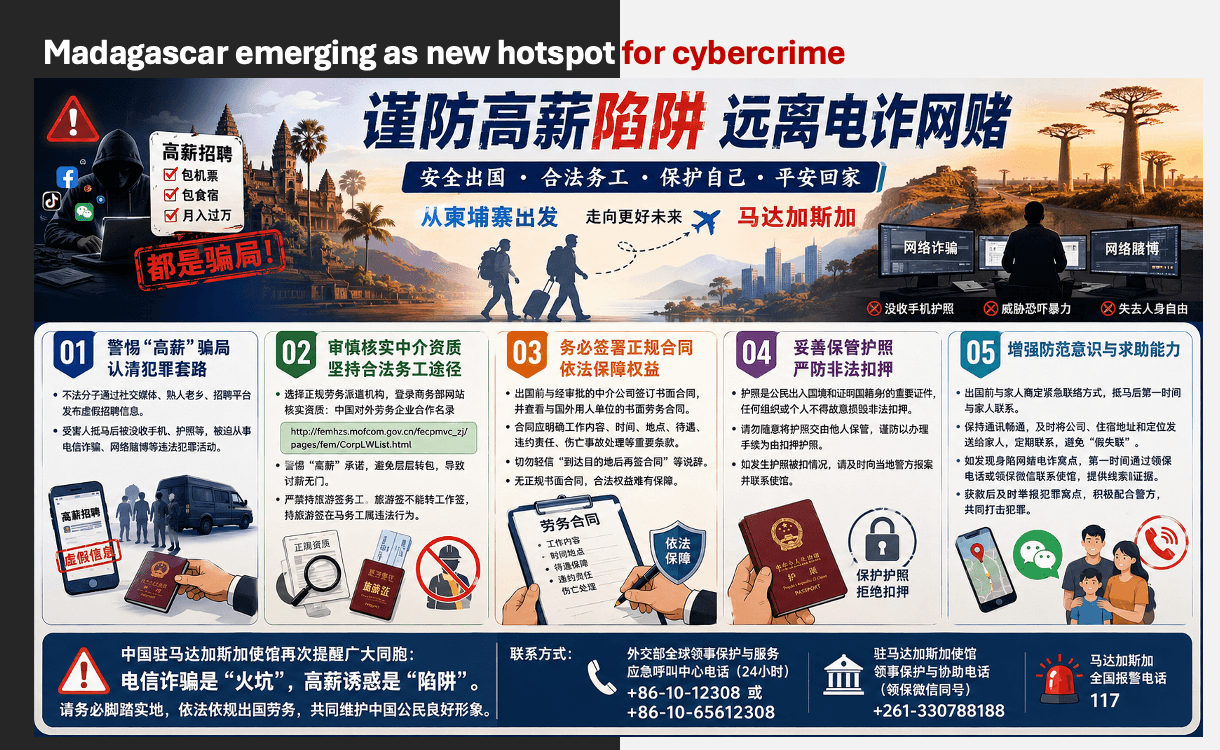
With Cambodia, Myanmar, and other Southeast Asian nations intensifying their crackdowns, telecommunications fraud networks are quietly shifting their operations to the Indian Ocean island nation of Madagascar. The Chinese Embassy in Madagascar has issued a series of emergency warnings in recent days, shedding light on this troubling new development.
On May 26, 2026, the Chinese Embassy in Madagascar issued a statement titled "Call for Joint Action Against Telecom Fraud in Madagascar," explicitly stating: "Recently, as many Southeast Asian countries have continued to intensify their crackdowns and rectification of telecom fraud, some telecom fraud operators and related illicit support personnel have been relocating from other countries to Madagascar, attempting to rebuild their criminal networks."
Around the same time, the Chinese Embassy in Indonesia issued a similar warning: there are indications that an increasing number of individuals previously involved in telecom fraud in Cambodia and elsewhere are relocating to Indonesia to operate.
The tightened restrictions in Southeast Asia are driving these criminals toward African and Pacific island nations with relatively weaker regulatory oversight.
The Embassy’s statement struck a stern tone, noting that telecom fraud crimes "affect a wide range of victims, employ ever‑changing tactics, and cause serious harm. They easily spawn other violent crimes such as money laundering, illegal detention, kidnapping, and extortion."
These activities not only pose a real threat to the lawful business operations and personal safety of overseas Chinese communities, but also "risk triggering misunderstandings and hostility toward Chinese nationals among the local Malagasy population, severely damaging the overall image of Chinese citizens abroad and undermining the long‑standing friendship between China and Madagascar."
An Alarming "Protection Network" From Within
Perhaps the most shocking revelation in the Embassy’s statement was its explicit criticism of certain local Chinese business people.
The statement noted: "We have particularly noticed that a small number of Chinese merchants, disregarding justice, moral decay, and greed, have acted as intermediaries for telecom fraudsters, seeking 'protection' for them. They have crossed legal red lines, severely harming the legitimate interests of the Chinese community in Madagascar."
This admission indicates that the rapid establishment of fraud operations in Madagascar has been facilitated by the active cooperation of a minority within the local Chinese community – ranging from providing premises and internet access to greasing local connections, forming a complete support chain for criminal activities.
Madagascar Tightens Entry Controls
In response to this emerging threat, Malagasy authorities have taken action.
On June 2, 2026, the Chinese Embassy in Madagascar issued a consular reminder stating that, in order to combat cross‑border telecom fraud and related criminal activities, Madagascar’s National Police Immigration Department has strengthened screening of foreign nationals at entry points.
Under current policy, Chinese citizens with a travel history to Southeast Asian countries are subject to heightened scrutiny.
The Embassy also reminded that holders of tourist visas (including visa‑on‑arrival) are strictly prohibited from engaging in business or work in Madagascar, and that tourist visas are non‑convertible – they cannot be changed into work or long‑term residence permits.
The "High‑Salary" Trap: From Recruitment to Enslavement
As early as April 22, 2026, the Chinese Embassy in Madagascar had already issued a warning titled "Beware of 'High‑Salary' Job Scams – Do Not Engage in Telecom Fraud."
The Embassy pointed out that criminals use social media and short‑video platforms to post fake job advertisements, luring Chinese citizens with promises of "high pay, free airfare, and free accommodation."
Once the victims arrive, the company immediately sends a vehicle to pick them up, confiscates their mobile phones and passports, cutting off all contact with their families and depriving them of personal freedom. They may be threatened, intimidated, or even subjected to violence, and are forced to participate in telecom fraud activities.
The criminals often pose as "e‑commerce customer service representatives," "translators," "cooks," or "marketing personnel," posting fake recruitment notices via personal social media accounts or through acquaintances and fellow townsmen.
The Embassy warned: "Telecom fraud is a 'pit of fire,' and the lure of high pay is a trap."
A Coordinated Effort to Eradicate the Scourge
In the face of this new cross‑border criminal trend, the Chinese Embassy in Madagascar has stated that it is working with Malagasy authorities to strengthen law enforcement cooperation, with the aim of eliminating the cancer of telecom fraud as soon as possible.
The Embassy reaffirmed its commitment to the principle of "punishing wrongdoers wherever they are and rooting out evil without mercy."
On June 1, 2026, Chinese Ambassador to Madagascar Ji Ping met with Madagascar’s Minister of Public Security, Eric Michel.
Ambassador Ji stated that China "highly commends and firmly supports Madagascar’s just actions in combating cross‑border telecom fraud in accordance with the law, and is willing to further deepen Sino‑Malagasy security cooperation."
The Embassy calls on all overseas Chinese to remain vigilant, refrain from providing any convenience to fraudsters, and jointly resist criminal activities.
Anyone with information on telecom fraud operations, or who knows of individuals or hideouts involved in such fraud, may call the Embassy’s dedicated hotline at +261 202252319 to schedule a confidential meeting.
The Embassy will strictly protect the confidentiality of all sources.
Meanwhile, the Association of Chinese Enterprises in Madagascar also issued a letter of appeal, demanding that "no member company, Chinese employee, or local staff shall participate in telecom fraud in any form," and that "no one shall provide fraudsters or syndicates with premises, internet access, financial channels, human resources, or logistical support of any kind."