Scam Centre targeting Australians using Telegram based investment scam raided in Pakistan
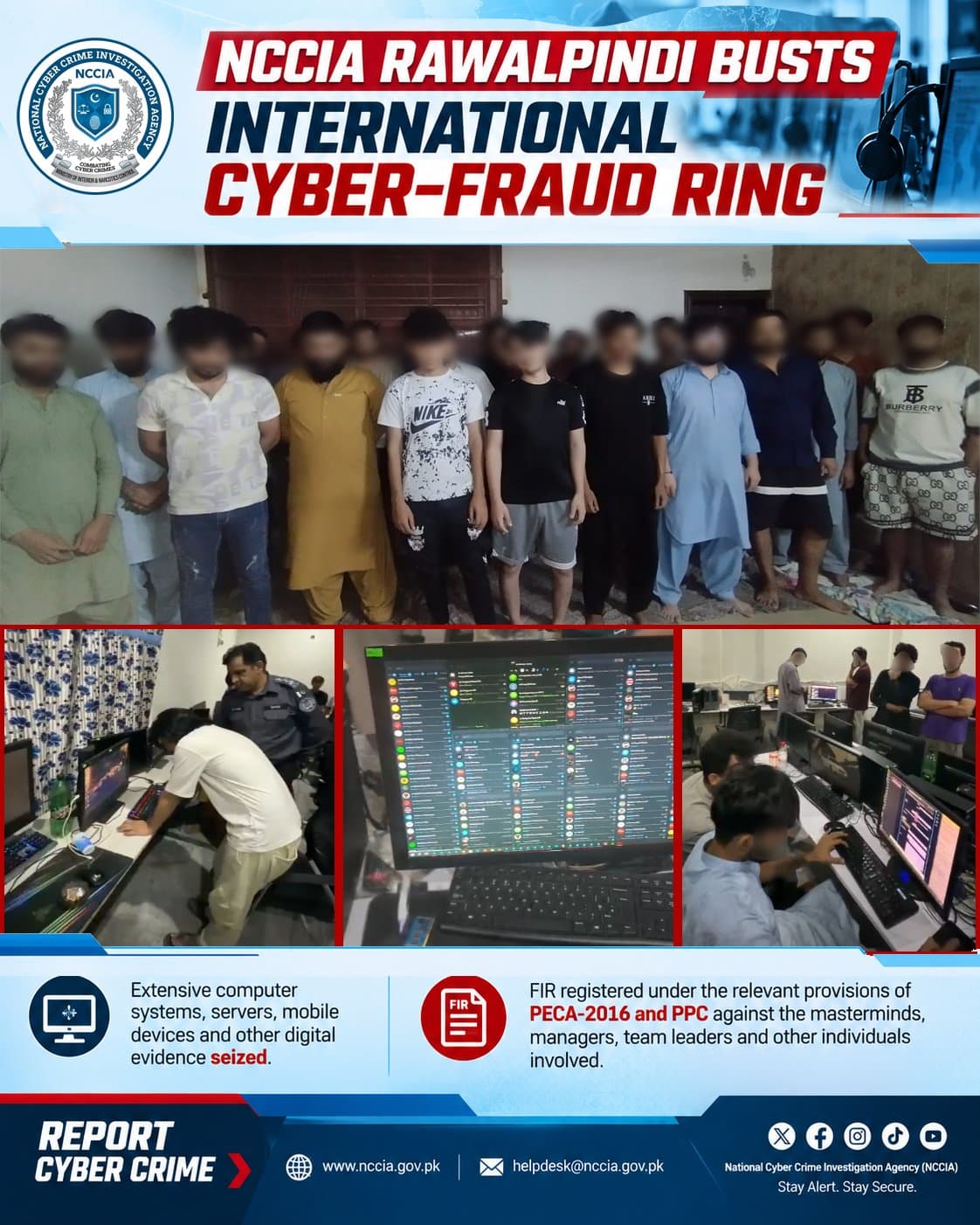
Pakistan’s National Cyber Crime Investigation Agency has raided the Abbasi Call Center in Rawalpindi, alleging an international cyber-fraud ring used fake Telegram profiles to build emotional relationships with foreign nationals, mainly Australians, then steered them into fake YouTube tasks and USDT crypto investments. Computers, servers and phones were seized. A case has been registered under PECA and the Pakistan Penal Code.
RAWALPINDI: Pakistan’s National Cyber Crime Investigation Agency (NCCIA) has raided an alleged international cyber-fraud ring run from the Abbasi Call Center in a private housing society off Chakri Road, Rawalpindi.
The agency said on 7 October 2026 that operators used fake Telegram profiles to form emotional relationships with foreign nationals.
Sources say the main victims were Australian citizens, who were then steered into fake YouTube “tasks” and USDT cryptocurrency investment schemes and defrauded of millions of rupees. Nearly half of all investment scam losses reported to Australian Police involve cryptocurrency, with figures hitting at least $180 million in cryptocurrency losses over a 12-month window.
Telegram - romance-to-investment play
On Telegram, operators posed as trusted contacts, built rapport, then pushed paid micro-tasks and crypto deposits framed as easy returns.

Once trust was established, victims were asked to keep sending money for tasks, unlocks or USDT investments.
The emotional cover made the transfers feel personal rather than like a cold scam pitch.
What was seized
NCCIA Rawalpindi says it seized computer systems, servers, mobile devices and other digital evidence.
Raid photos shared by the agency show rows of workstations and Telegram Desktop open with long chat lists.
A case has been registered under the Prevention of Electronic Crimes Act, 2016, and the Pakistan Penal Code against masterminds, managers, team leaders and others.
NCCIA Director General Syed Ali Nasir Rizvi said the agency is enforcing a zero-tolerance policy on cybercrime.
The agency has not released an exact arrest figure for this raid.
Analyst note
Visuals from the raid show that the scammers were using Telegram Desktop for communicating with Victims.

Each pane is a long list of active chats with circular profile pictures.
That is how these desks are run: one person juggles many accounts and many victims at once, often with scripts or pre-written replies. The density of open conversations is the point.
Romance and “task” scams need volume, keep dozens of marks warm until some send money for a “subscription task,” a “verification deposit,” or a USDT transfer that never comes back.