AI Deepfake KYC Fraud: How Scammers Bypass Face Verification (and How to Protect Yourself)
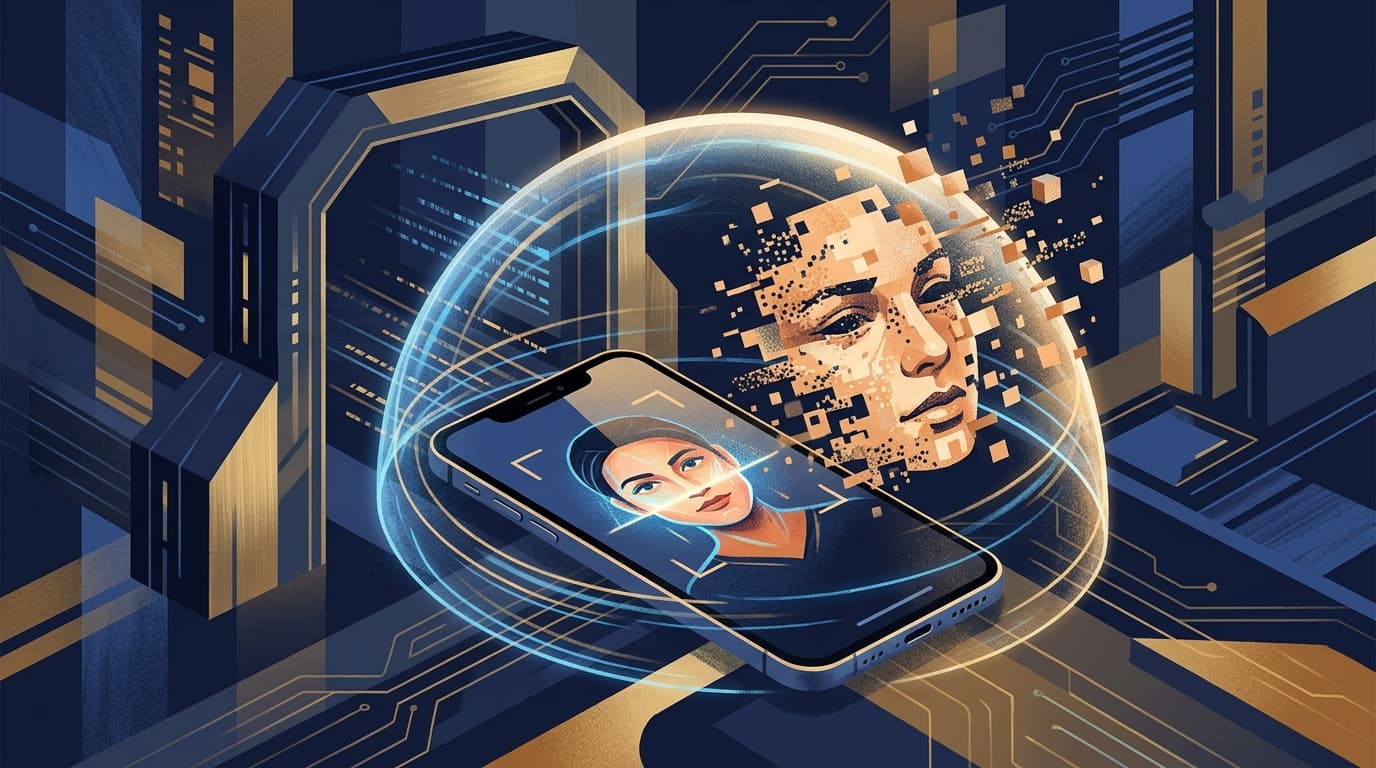
India's I4C has warned that criminals are using AI deepfakes and cloned voices to defeat the facial and Video-KYC checks banks rely on. Here's how the scam works, the warning signs, and the steps that actually protect your accounts.
Quick answer: India's Indian Cyber Crime Coordination Centre (I4C), under the Ministry of Home Affairs, has warned (Advisory TAU/ADV/016, 10 June 2026) that fraudsters are using AI deepfakes and voice clones to bypass facial authentication, liveness verification and Video-KYC at banks and fintechs. The strongest thing you can do today is lock your biometrics and never perform face movements on camera for a stranger. If you have already been hit, report immediately at cybercrime.gov.in or call 1930.
What is happening
Face and "liveness" verification became the backbone of remote banking precisely because a live human face was hard to fake. Generative AI has eroded that assumption. The I4C advisory does not describe a hypothetical — it lays out an active, repeatable playbook aimed at financial infrastructure: KYC onboarding, account recovery and digital-wallet activation. The weakest link is rarely the bank's server; it is a recorded video of you, captured through everyday social engineering.
How the scam works — the 5 steps I4C describes
- Initial contact. Fraudsters reach out via social media, messaging apps, job portals, dating platforms or phone calls — often with a friendly hook like "we have a job opportunity, can we do a quick video call?"
- Facial data collection. Your face is pulled from public profiles, or you are talked into a "video interview" where you are asked to look at the screen, turn your head, blink and speak — the exact movements a liveness check looks for. The call is being secretly recorded.
- AI deepfake generation. The footage is processed by AI tools that build a realistic digital replica able to mimic your expressions, eye-blinks and voice.
- Attempted bypass. Where the target system has no deepfake detection, the synthetic video is played into the facial-authentication and liveness step to impersonate you.
- Fraudulent KYC and account activation. With verification "passed," criminals create or activate accounts and wallets in your name — the launchpad for financial fraud.
How to protect yourself
- Lock your biometrics. I4C calls this the single strongest defense against this kind of remote identity theft. Most national-ID and banking apps let you freeze your biometric profile so it cannot be used for new verification until you unlock it. Keep it locked by default.
- Be ruthless about "video interviews" from strangers. Treat any unsolicited request to do a live video call — especially one that asks you to blink, turn your head or read text aloud — as a red flag. Job offers, investment "advisors" and new online friends are common covers.
- Limit the face you make public. Clear, face-on videos and photos on open profiles are raw material for these tools. Tighten privacy settings on social and dating platforms.
- Watch your notifications. Take every "unauthorized login" or "new authentication attempt" alert seriously — it may be your replica being tested against an account.
- Treat a sudden loss of mobile signal as an emergency. If your phone abruptly loses network, call your telecom provider at once — it can signal a fraudulent SIM swap being used to intercept your OTPs.
If you think you have been targeted
Speed decides whether the money is recoverable.
- Report immediately at cybercrime.gov.in or call 1930. The faster a complaint is filed, the better the chance of freezing siphoned funds before they leave the banking network — here is exactly how India's 1930 / CFCFRMS pipeline freezes fraudulent transfers.
- Follow the step-by-step process in our full guide on how to report cybercrime in India and get your money back.
- Hand over the evidence: the fraudster's contact number and the link to the video call they used.
- Alert your bank to freeze accounts and flag any KYC or account-recovery activity you did not initiate. If you are unsure what to do in the first hour, start with what to do right after a scam.
The bigger picture
This is the financial-fraud edge of a global problem: as deepfake tools get cheaper and better, "prove you're human" checks built for the pre-AI era are under pressure worldwide, and banks and regulators everywhere are racing to add deepfake detection to onboarding. I4C's advisory pushes that responsibility onto fintechs and customer-onboarding systems — but until detection is universal, the practical defense sits with you: lock your biometrics, guard your face, and never perform face movements on camera for a stranger.