Sharjah Prosecution Official Highlights Fraud Tactics Targeting the Elderly Amid Rising Cases Across the UAE and Globally
Counselor Mayed Al Darmaki, Head of the Kalba Public Prosecution under the Sharjah Public Prosecution shares insights about evolving tactics used by fraudsters who specifically prey on elderly residents on Sharjah TV’s program Qadiya lil Hiwar (“A Case for Dialogue”) to aired on August 11, 2026.
Sharjah, UAE - The Head of the Sharjah Public Prosecution has issued a detailed public advisory explaining the calculated, multi-layered tactics used by organized fraud networks to target elderly residents, as the UAE witnesses a sharp escalation in sophisticated cyber-enabled financial crimes.
Speaking as part of the ongoing "Be Aware" and "Athar (Impact)" community awareness programmes, the prosecution chief warned that crimes against seniors are no longer random calls, but highly engineered operations that combine social engineering, digital impersonation, and psychological manipulation.
The warning comes amid a surge in cases across the Emirates.
The Big Picture: A Rising Threat
Fraud targeting seniors is a global epidemic, but the UAE is seeing it accelerate at an alarming pace.
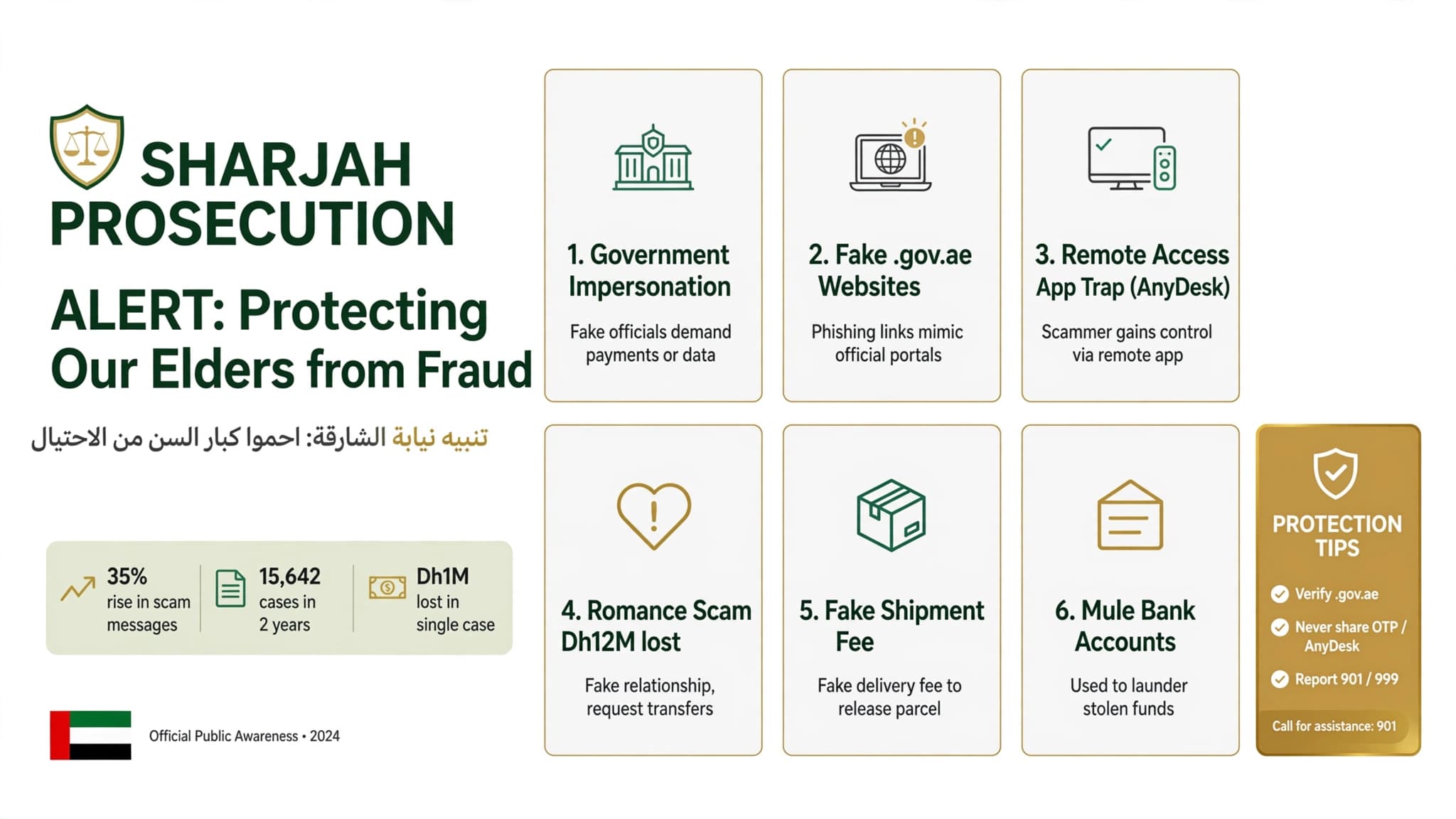
The UAE Cyber Security Council has warned of a 35% rise in fraudulent messages targeting individuals across the country.
In Abu Dhabi alone, police handled 15,642 electronic-fraud cases over the last two years and managed to return AED 140 million to victims.
In Sharjah, police recently dismantled an international fraud network that swindled more than Dh3 million from victims using sophisticated online scams, and in another case, a single victim lost Dh1 million after clicking a fake government link.
Another operation saw criminals withdraw Dh3 million using stolen cards before accounts could be frozen.
Prosecutors say the elderly are deliberately chosen.
According to investigations, such scams are highly targeted and meticulously executed, often aimed at elderly individuals, as they are more likely to have resources and easily succumb to the technical complexity of these attacks.
6 Tactics Explained by Sharjah Prosecution
According to the Sharjah Public Prosecution, most cases follow a deliberate and gradual pattern that exploits trust, fear, and loneliness.
- The Government Impersonation - "You Are Under Investigation" This is the most common entry point. The network begins with targeting victims and impersonating public officials. Victims receive calls from people claiming to be from Sharjah Police, Public Prosecution, Customs, or a bank. They are told their Emirates ID has been used in money laundering or a shipment is held. The call creates panic and urgency, forcing the elderly victim to obey without verifying or consulting family. In India, this modus operandi is commonly known as "Digital Arrest".
- The Fake Government Portal Trap - SEO Poisoning Sharjah Police's Digital Evidence Department revealed a new, highly advanced method. When a resident searches for "consumer protection" to file a complaint, fraudulent links often appear at the top of search results and are designed to look official, complete with imitation government logos, forms, and automated messages. The victim is redirected to a fake website impersonating an official portal. They fill in personal details and upload invoices and IDs. The site then shows: "Your complaint has been successfully received." In reality, all data goes directly to criminals.
- The Remote Access Takeover Phase Two is where the money is stolen. Scammers call back, posing as officials verifying the complaint, and convince victims to download remote-access software like AnyDesk. Lieutenant Nouf Al Harmoudi explained that these apps are commonly used, allowing criminals to mirror the victim’s phone screen and secretly access banking details. Once mirrored, they can see OTPs, perform transfers, and make purchases in real time.
- The Romance / Emotional Entrapment - "Love Scam" Brigadier Saeed Al Hajri, Director of Cybercrime in Dubai, described this as akin to "skinning the victims alive." This tactic heavily targets lonely seniors. In one case shared by prosecution, an elderly European woman lost nearly 12 million dirhams after being emotionally manipulated. The fraudster, posing as a handsome businessman residing in Dubai, convinced her to sell all her assets and transfer the proceeds. He warned about the dangers of "romantic fraud" or "emotional entrapment," highlighting the severe financial and psychological toll. Scammers study social media profiles to learn about emotional needs, financial status, and loneliness before striking.
- The Fake Shipment / Delivery Fee Scam Colonel Dr Khalifa Balhai, Director of the CID, explained another primary method is "fake shipment scams," in which suspects impersonate shipping and insurance companies. Victims are deceived into believing they have pending shipments requiring clearance and demanded payments under various pretexts, such as customs fees or insurance charges. The gang even unlawfully accessed data of a real shipping insurance company to enhance credibility.
- The Mule Account Network To avoid detection, these gangs don't use their own accounts. Investigations revealed a structured operation that exploits workers’ personal data to open bank accounts used to channel funds. Workers are lured with promises of cash or airline tickets to open accounts in their names.
The operation often extends beyond the UAE, with one suspect managing activities from abroad while others operated locally, receiving and withdrawing funds from ATMs.
Why This Is Different Now
Colonel Balhai emphasised that the case highlights the growing sophistication of fraud techniques that combine social engineering with digital tools. This is no longer simple phishing.
Brigadier Omar Bualzoud called it "one of UAE’s most advanced cybercrimes", a serial crime that begins with a fake website and escalates into complete control of a victim's device.
The networks are now transnational, using AI deepfakes, spoofed.gov.ae domains, and international money mule networks, with overseas suspects pursued via Interpol.
How To Protect Elderly Family Members
Sharjah Public Prosecution and Sharjah Police have issued a strict advisory:
- Verify the Domain: Legitimate UAE government sites use.gov.ae. Never trust top-sponsored search results blindly.
- Never Share Control: No government agency in the UAE will ever ask you to download AnyDesk, share your screen, or provide OTPs, passwords, or Emirates ID photos via phone or SMS.
- Stop, Think, Protect: Avoid responding to suspicious payment requests, verify sources, and refrain from sharing personal or banking information.
- Talk About Loneliness: Romance scams thrive on isolation. Regular check-ins with elderly family members are the best defence.
- Report Immediately: Call Sharjah Police on 901 for non-emergency and 999 for emergency, or use the Ministry of Interior app. Do not delete chats or transfer more money to "recover" lost funds.
Under Federal Decree-Law No. 34 of 2021 on Combating Rumours and Cybercrime, fraud, impersonation of public officials, and illegal access to bank accounts can lead to imprisonment and fines up to Dh2 million.
If someone calls claiming to be police, prosecution, or customs and asks for money, it is 100% a scam. Hang up and call 901 directly.