Papua New Guinea raid exposes cyber-scam networks moving into the islands, 4 Chinese detained
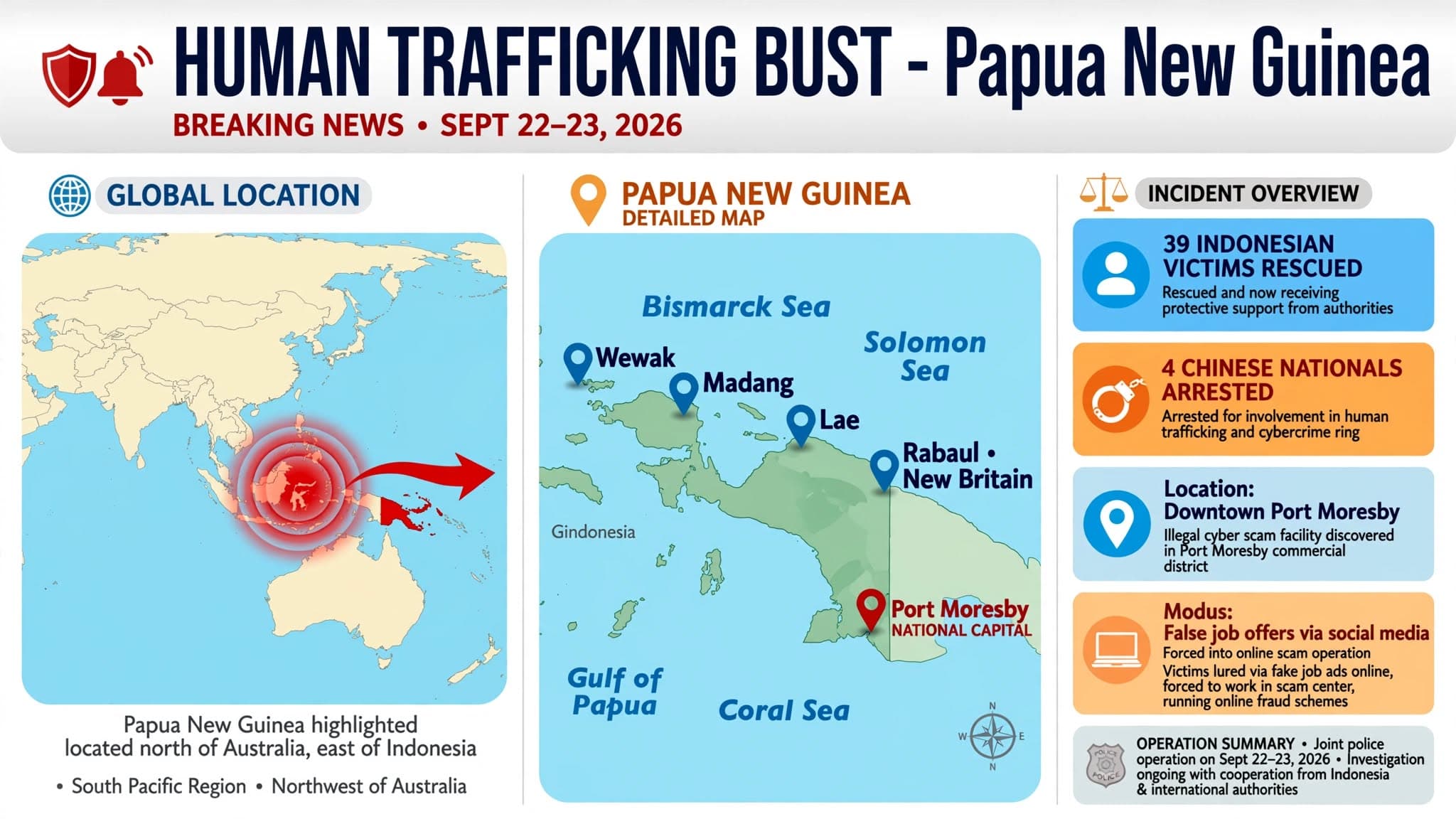
After continuous crackdown in south east asia, the scams have dispersed across various geographies of the world. These include Papua New Guinea, Sri Lanka, Pakistan, Madagascar etc. It becomes increasingly difficult for global enforcement agencies in tracking down the centres
PORT MORESBY, Sept. 26, A police raid in Papua New Guinea’s capital that freed 39 Indonesian nationals has revealed what officials describe as the country’s first known case of trafficked workers being forced to run online fraud operations, placing the Pacific nation on a growing map of smaller countries targeted by transnational cybercrime syndicates. The discovery has raised concern that networks long associated with large scam compounds in parts of Southeast Asia are now testing new ground farther east.
The raid
Officers from the Royal Papua New Guinea Constabulary’s Transnational Crime Directorate executed search warrants at a three-bedroom house in downtown Port Moresby on Sept. 22. Inside, they found 34 men and five women confined in cramped conditions. Four Chinese nationals were detained at the scene.
Investigators said the Indonesians had been recruited through social media with false job offers and then held against their will.

A police source told that the group was coerced into operating an online scam from the living room of the property. Electronic devices and documents were seized. Police Commissioner David Manning told the Organized Crime and Corruption Reporting Project that Papua New Guinea appeared to have been the intended destination rather than a transit point.
“All indications are they were brought in specifically to run this scam from Papua New Guinea.”, David Manning, Police Commissioner
Manning said it was the first such case of foreign nationals being trafficked into the country for online fraud that he was aware of.
Wider network
Deputy Commissioner Donald Yamasombi, who led the operation, said early inquiries suggested the suspects may be linked to a syndicate operating between Southeast Asia and the Pacific. Manning said more arrests were expected as investigators traced connections inside Papua New Guinea and overseas. The raid follows earlier warnings that criminal groups previously concentrated in parts of Southeast Asia were seeking locations with weaker oversight. A June assessment by the Pacific Security College said Palau, Tonga, Fiji, Vanuatu, Timor-Leste and Papua New Guinea had already encountered elements of the threat. Richard Horsey, senior Asia adviser at the International Crisis Group, told OCCRP the Port Moresby case added Papua New Guinea to a list of developing countries, including Timor-Leste, Madagascar and Sri Lanka, being infiltrated by groups responsible for hundreds of billions of dollars in annual fraud.
What happens next
Authorities said the welfare of the rescued Indonesians was the immediate priority. Officials are working with the Indonesian embassy on consular support, health checks and possible repatriation.
“There will be no leniency for those who traffic and exploit people.”, David Manning
Papua New Guinea signed the United Nations Convention Against Cybercrime in October 2025 and has been reviewing its Cybercrime Code Act, including proposed measures against online fraud and digital impersonation. Police said they would work with international partners to identify any offshore parts of the network. Whether the Port Moresby house was an isolated operation or the start of a larger presence remains under investigation. For now, the raid has shown that the forced-labour model used in scam compounds elsewhere has reached the Pacific.