Indian Prime Minister calls for global framework on deepfakes and cross-border cyber fraud
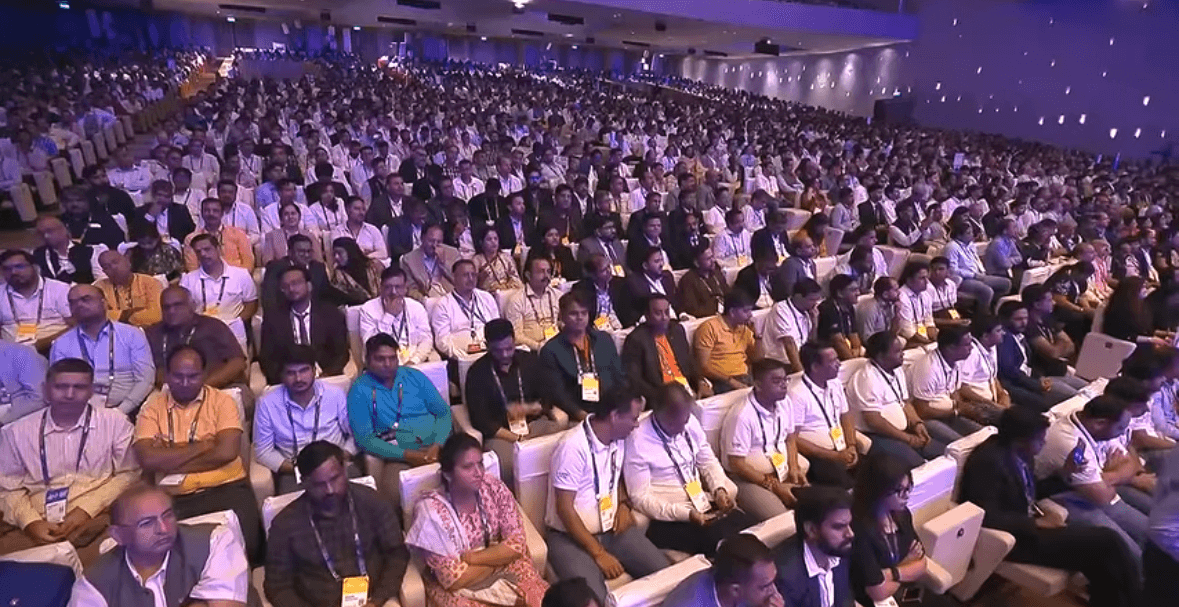
Indian Prime Minister Narendra Modi has called for a global framework to tackle deepfakes and cross-border cyber fraud. He urged the GSMA and telecom operators worldwide to build a joint mechanism that stops fraud before it reaches users. Speaking at the 10th India Mobile Congress in New Delhi on 8 October 2026, the Prime Minister said governments, tech firms, operators and banks must act together.
NEW DELHI: Indian Prime Minister Narendra Modi has called for a global framework to counter deepfakes and cross-border cyber fraud, warning that digital crime no longer respects national boundaries.
Opening the 10th India Mobile Congress in New Delhi on 8 October 2026, the Prime Minister said: “We are all witnessing the major challenge that deepfakes have become. That is why it is crucial to work on a global framework to tackle this.”
One crime, three countries
The Prime Minister described how modern fraud works: “A person sitting in one country can commit a crime in a third country with the help of someone in a second country.”
He made a direct appeal to the GSMA, the global body of mobile operators: “Let us create a global mechanism that can prevent such fraud from reaching people in the first place.”
He said governments, technology companies, telecom operators and financial institutions all need to be part of that framework, and that India is ready to share what it has learned.
He also called for a global framework on data security, saying technology scales only when it earns people’s trust.
Trust first, then scale
“Technology achieves scale only when it earns trust,” the Prime Minister said, adding that cyber fraud and cybercrime “do not recognise borders.”
He told delegates that with four years left in the decade, their discussions would shape the next decade’s roadmap for the mobile market, in India and worldwide.
India, he said, has moved from consumer to creator and now aims for products whose design, technology and intellectual property are all Indian.
To get there, the government is rewriting decades-old laws: the Telecommunications Act has created a modern regulatory framework, and structural burdens such as adjusted gross revenue (AGR) dues and bank guarantees are being rationalised.
What India already does
India has moved early at home.
Amendments to its IT Rules in February 2026 require AI-generated content to carry labels and permanent metadata, and force platforms to remove unlawful content within three hours of a government order, down from 36 hours.
Telecom-level tools such as Sanchar Saathi let citizens report fraudulent calls and messages and block lost or misused SIMs and handsets.
Why it matters globally
Scam compounds in Southeast Asia, call centres in South Asia and laundering networks that move money through mule accounts and crypto all exploit the gaps between national jurisdictions.
Voice-clone and face-swap deepfakes now power fake “digital arrest” calls, CEO-impersonation transfers and celebrity investment ads across many countries at once.
Without shared standards for blocking spoofed calls at the network, labelling synthetic media and tracing fraud proceeds across borders, each country is left fighting a transnational industry alone.