India's UP Police Arrest Man Accused of Running Telegram Groups to Share Child Sexual Abuse Material, Acting on NCMEC CyberTipline Alert
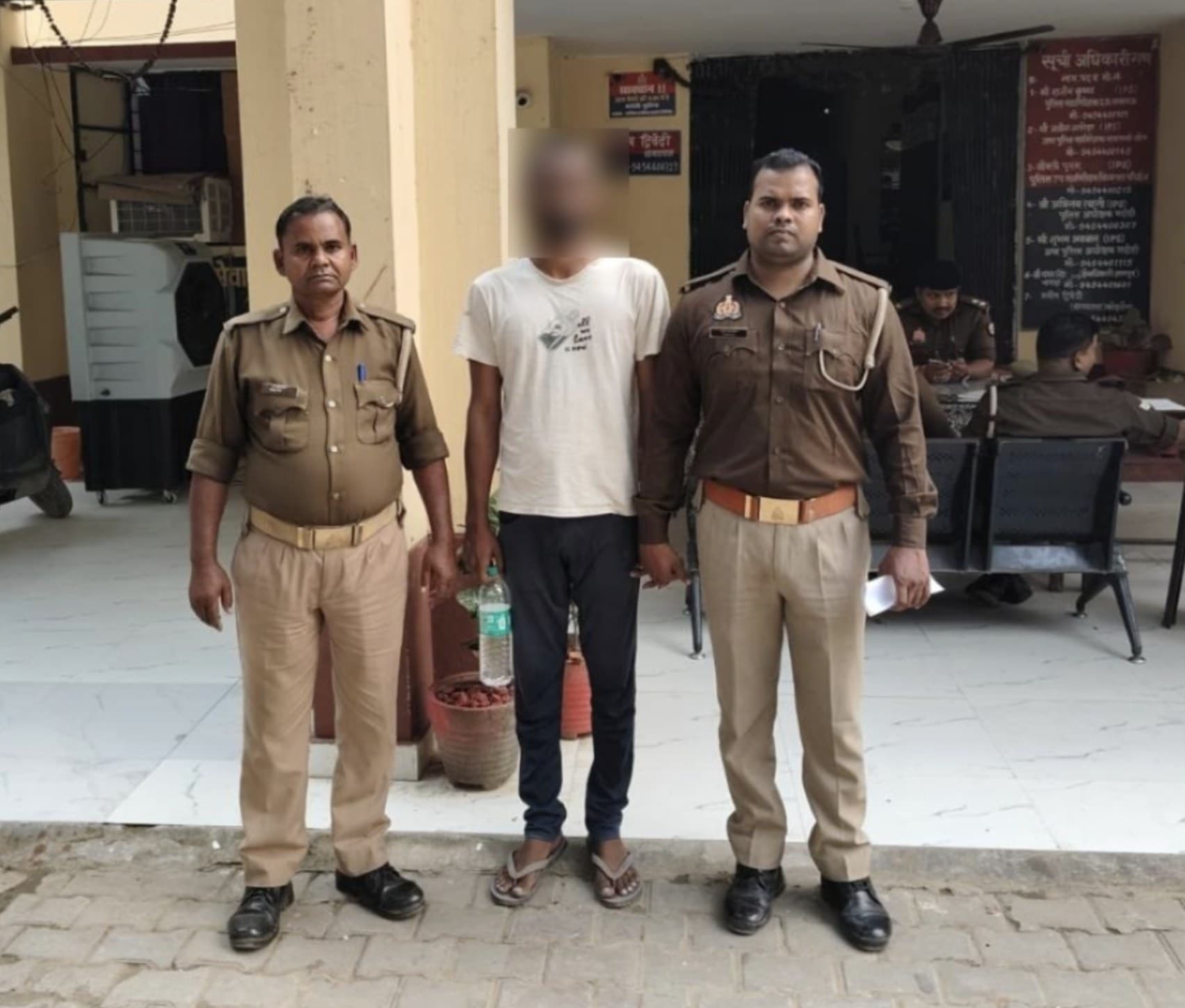
Police in Bhadohi, in India's Uttar Pradesh state, have arrested a 27-year-old man accused of creating multiple Telegram groups to collect and share child sexual abuse material (CSAM). The case began with a CyberTipline report received at Koirauna police station. An FIR was registered under India's IT Act, the POCSO Act and the Bharatiya Nyaya Sanhita. Officers recovered a Redmi (Xiaomi 15) phone said to have been used in the offence. The arrest was made on 10 November 2026.
Police in Bhadohi district, in the northern Indian state of Uttar Pradesh, have arrested a man accused of creating multiple groups on Telegram to collect and share child sexual abuse material (CSAM).
The case began when Koirauna police station received a report through the CyberTipline, the reporting system run by the United States National Center for Missing & Exploited Children (NCMEC). According to that report, the accused had created several Telegram groups, compiled obscene videos and photographs of children, and was circulating them.
The in-charge of the district cyber police station registered first information report (FIR) No. 178/26 at Koirauna police station under Section 67B of the Information Technology Act, 2000, Sections 13, 14 and 15 of the Protection of Children from Sexual Offences (POCSO) Act, 2012, and Section 295 of the Bharatiya Nyaya Sanhita (BNS), 2023, India's criminal code. Legal proceedings were already under way when the arrest was made.
Arrest and recovery
On 10 November 2026, Gaurav Mishra, son of Rajbihari Mishra, aged about 27 and a resident of Bhadohi district, was taken into police custody. The arrest was carried out by Inspector Setanshu Shekhar Pankaj, the investigating officer from Gopiganj police station, during area patrol in the course of the pending investigation. He was accompanied by Constable Siddhgopal of Koirauna police station and Constable Kanhaiya Kumar of the Cyber Crime police station.
The operation was conducted under the direction of Abhinav Tyagi, Superintendent of Police, Bhadohi, and the supervision of Shubham Agarwal, Additional Superintendent of Police, Bhadohi.
Police recovered one mobile phone, described in the press note as a Redmi (Xiaomi 15), which they said was used in the offence.
The laws invoked
Section 67B of the Information Technology Act, 2000, is India's principal electronic offence against child sexual abuse material. It punishes publishing or transmitting material in electronic form that depicts children in sexually explicit acts, and also collecting, browsing, downloading, exchanging or distributing such material. A first conviction can bring imprisonment of up to five years and a fine of up to about $10,700 (Rs 10 lakh); a subsequent conviction can bring up to seven years and the same fine. For the purposes of the section, a child is a person under 18.
The POCSO Act, 2012, is India's special law on sexual offences against children. Section 13 makes it an offence to use a child for pornographic purposes, including the representation of a child's sexual organs, the depiction of a child in real or simulated sexual acts, or an indecent or obscene representation of a child. Section 14 sets the punishment for that offence at a minimum of five years' imprisonment and a fine, rising to a minimum of seven years on a subsequent conviction. Section 15 separately punishes the storage or possession of pornographic material involving a child, including material kept for transmission, display or distribution, with imprisonment of up to three years, or a fine, or both; storage for a commercial purpose carries a higher term.
Section 295 of the Bharatiya Nyaya Sanhita, 2023, which replaced the Indian Penal Code, punishes the sale, hire, distribution, exhibition or circulation of obscene objects to a child, or an offer or attempt to do so. A first conviction can bring imprisonment of up to three years and a fine of up to about $21 (Rs 2,000); a subsequent conviction can bring up to seven years and a fine of up to about $53 (Rs 5,000). The objects are those referred to in Section 294 of the Sanhita, which covers obscene books, writings and similar material, including display in electronic form.
India's push on women and child online safety
The Bhadohi case began with a CyberTipline alert, a route India has used since April 2019, when the National Crime Records Bureau (NCRB) signed a memorandum of understanding with NCMEC to receive reports of online child sexual exploitation and share them with the state or union territory concerned. As of 31 March 2024, more than 6.9 million (69.05 lakh) such reports had been forwarded to states and union territories, the Ministry of Women and Child Development told India's Parliament. NCRB has said it built a system to download the reports, sort them by state and push them to the National Cybercrime Reporting Portal (https://cybercrime.gov.in). The Indian Cyber Crime Coordination Centre (I4C), an attached office of the Ministry of Home Affairs, operates that portal.
The portal has a dedicated facility for reporting child sexual exploitation and abuse material and rape-related content, including anonymously. As of 30 April 2024, 194,000 (1.94 lakh) complaints of that kind had been reported on the portal, according to the same parliamentary reply. A 24-hour national cybercrime helpline, 1930, is also available and, the government has said, offers guidance to victims, including women and children, on how to report cybercrimes.
These tools sit under a wider Ministry of Home Affairs effort. Under the Cyber Crime Prevention against Women and Children (CCPWC) scheme, financed from the Nirbhaya Fund, the ministry had released about $14.2 million (Rs 132.93 crore) to states and union territories for capacity building, including cyber forensic-cum-training laboratories, the Union Minister for Women and Child Development told Parliament in March 2026. Thirty-three such laboratories have been commissioned, and more than 24,600 police personnel, prosecutors and judicial officers have been trained.