How India's CBI Became a Key Global Partner Against Cyber Fraud
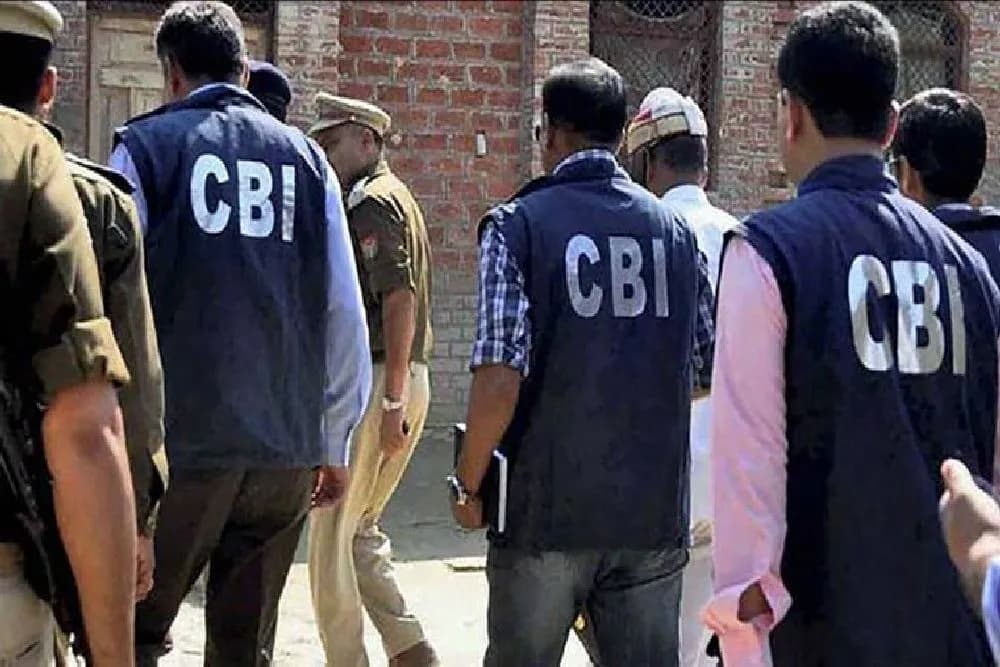
Behind headlines about scams traced to India, the CBI's Operation Chakra has quietly become a key partner of the FBI, UK NCA, and Microsoft. Here's the work.
How India's CBI Became a Key Global Partner Against Cyber Fraud
Read the international press on cybercrime and one impression sticks: a lot of scam calls, fake tech support, fake Microsoft, fake "your social security number is suspended", are routed through India. The reporting is often fair, because the call centres are real. But it tells only half the story.
The half that rarely makes the front page is this: India's own federal police, the Central Bureau of Investigation (CBI), has quietly become one of the most active partners in dismantling those same networks, working alongside the FBI, the UK's National Crime Agency, Australia's federal authorities, and Microsoft. The operation has a name: Operation Chakra.
It is now in its fifth phase, and the arrests have been steady, transnational, and unusually well-coordinated.
The kingpin caught at the airport
In August 2025, CBI officers intercepted Arjun Prakash at Indira Gandhi International Airport in Delhi as he tried to board a flight to Kathmandu. According to the agency, Prakash was the principal architect of a Noida-based call centre called "FirstIdea" that ran a sophisticated tech-support scam against citizens of the UK, Australia, and the European Union.
The case had begun three months earlier when the FBI, UK NCA, and Microsoft jointly shared intelligence with the CBI, prompting an FIR in May 2025.
The arrest mattered for two reasons. It showed that international agencies trusted Indian authorities enough to share live intelligence, and it showed the CBI could turn that intelligence into a result, even chasing the suspect to the boarding gate.
A ₹350-crore tech-support fraud, dismantled with the FBI
In a separate operation, the CBI busted a syndicate that had siphoned more than ₹350 crore (about $40 million) from US citizens since 2023. Three operatives, Jigar Ahmed, Yash Khurana, and Inder Jeet Singh Bali, were arrested in Amritsar and Delhi after raids that intercepted 34 people working inside an illegal call centre, mid-scam. The agency recovered ₹54 lakh in cash, mobiles, laptops, and digital evidence linking transfers to cryptocurrency wallets the gang controlled. The operation was carried out in direct coordination with the FBI.
A separate Operation Chakra phase, in September 2024, had already dismantled a virtual-asset and bullion-backed cybercrime ring in Mumbai, recovering 57 gold bars, ₹16 lakh in cash, and a laptop used to manage cryptocurrency, again working with the FBI.
Rescuing Indians trafficked to Myanmar
Perhaps the most underreported part of the story is humanitarian.
In March 2026, the CBI arrested Sunil "Krish" Nellathu Ramakrishnan in Mumbai. According to the agency, he was a central kingpin in a network that lured Indian job seekers to Thailand with promises of legitimate work, then trafficked them across the border to scam compounds in Myanmar's Myawaddy region, including the notorious KK Park facility. Once inside, victims were forced under threat of violence to run digital-arrest scams, romance frauds, and crypto-investment cons against people worldwide.
This is the same global pig-butchering crisis that INTERPOL has flagged as drawing trafficking victims from 66 countries. India's CBI is one of the few national agencies actively prosecuting both ends, the criminals running the compounds and the recruiters who feed them.
Taking the fight to the infrastructure
The most recent phase, Operation Chakra V, has shifted to the plumbing of cybercrime itself. In May 2025, CBI conducted searches at 42 locations across 8 states, Assam, West Bengal, Bihar, Uttar Pradesh, Maharashtra, Telangana, Karnataka and Tamil Nadu, targeting Point of Sale agents of telecom operators accused of selling SIM cards to fraudsters in collusion with rogue insiders. Those SIMs power digital-arrest scams, UPI frauds, fraudulent investment ads, and impersonation cases.
In a parallel sweep, the agency uncovered roughly 8.5 lakh "mule" bank accounts opened across more than 700 branches with weak or missing KYC checks, accounts that act as the digital washing machine for stolen money. By targeting the SIMs and the mule accounts, the CBI is going after the rails the criminals can't operate without.
In October 2025, raids across six states, Delhi NCR, Haryana, Rajasthan, Gujarat, Kerala and West Bengal, exposed a hawala-and-mule-account network laundering proceeds from digital-arrest scams whose operators were physically based in Cambodia, again confirming the cross-border nature of the threat.
Why this matters globally
Cybercrime today is borderless. A retiree in Ohio loses her savings to a "wrong number" investment text sent by a trafficked worker in Myanmar, while the money flows through mule accounts in India and crypto wallets controlled from Cambodia. No single national agency can untangle that alone.
What Operation Chakra demonstrates is that India is no longer just a geography that appears in scam headlines, it is one of the few jurisdictions actually willing and able to act on FBI/NCA intelligence at scale, prosecute its own citizens running scams against foreigners, and rescue its own citizens trafficked into the same industry abroad.
For international readers, that is a story worth knowing. For Indian readers, it is a quiet correction to a public image often shaped by the worst-behaving actors and rarely by the agencies hunting them.
If you're a victim
For anyone in India who has been targeted by a digital-arrest scam, investment fraud, or cyber-enabled theft, the official channels are:
- Call 1930, the national cybercrime helpline.
- File a complaint at cybercrime.gov.in, the National Cyber Crime Reporting Portal.
Acting within the first 24 hours significantly increases the chance of freezing transferred funds.