Fake PagoPA SMS about a €990 'authorised payment' is a callback scam
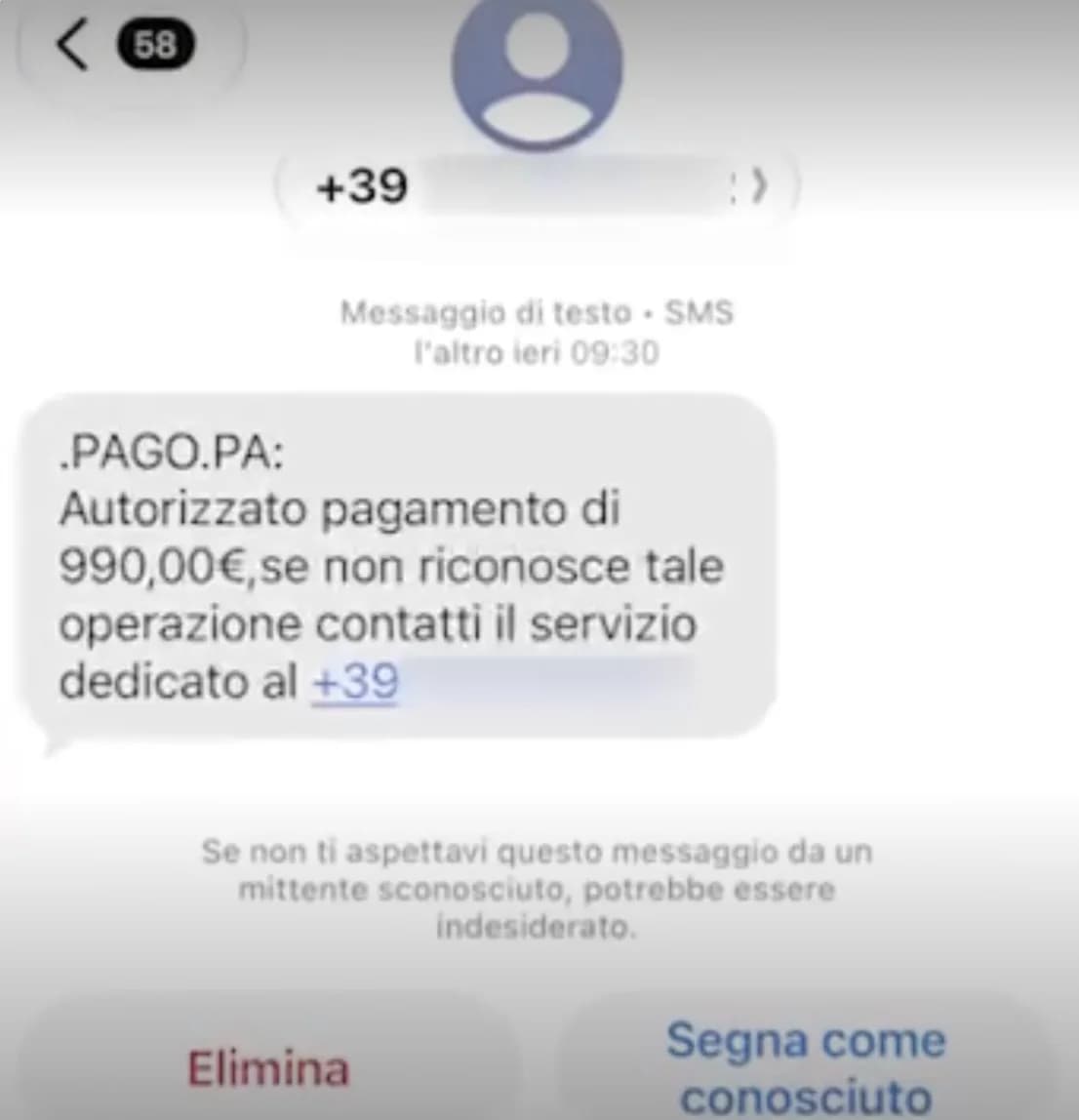
A text signed ".PAGO.PA" claims a €990 payment has been authorised and tells the recipient to call a "dedicated service" if they don't recognise it. It is a callback scam: the number connects victims to fraudsters posing as support staff.
Nov 28 (Ministry of Cyber Affairs) – A fake SMS using the name of pagoPA, Italy's national platform for paying public bodies, is warning recipients of a €990 payment they did not make.
Like the fake Poste Italiane "POSTEINFO" alert reported by Ministry of Cyber Affairs, it carries no link. It asks the reader to phone an Italian (+39) number, moving the victim from a text message into a live conversation with a scammer.
PagoPA never asks for passwords, card details or bank data by email or SMS, according to its guidance.
Scam message
The text reads, in Italian: ".PAGO.PA: Autorizzato pagamento di 990,00€, se non riconosce tale operazione contatti il servizio dedicato al +39…" In English: ".PAGO.PA: Payment of €990.00 authorised. If you do not recognise this transaction, contact the dedicated service on +39…"

Spot the Scam
- It comes from an ordinary phone number. The sender is a +39 number, and the iPhone itself warns that the message is from an unknown sender and may be unwanted.
- PagoPA is not your bank. It is the platform Italians use to pay councils, tax offices and other public bodies. You start each payment yourself through your bank, the IO app or another provider; there is no pagoPA account that can "authorise" a charge behind your back.
- The name is wrong. The service writes its name "pagoPA". The text uses ".PAGO.PA", with a stray full stop at the start.
- There is no reference. A real pagoPA payment carries a notice code and the name of the public body being paid. This text gives only an amount.
- It pushes you to call. A large, unexplained charge and a phone number are designed to make you act before you check.
How the callback scam works
The text is only the bait. The theft happens on the phone call. In similar Italian callback scams described by Poste Italiane, the pattern runs like this:
- False SMS or iMessage Notification. A text reports a payment or login the victim did not make.
- Call. The victim rings the number, and a fake operator confirms the "fraud".
- Banking Details theft. The victim is asked for card details or one-time codes, or told to move money to a "safe" account the scammer controls.
Scammers have used the pagoPA name before, mostly in fake traffic-fine messages that link to clone payment pages.
What to do if you received it
If you have not called:
- Do not call the number or reply. Delete the message and block the sender.
- To check for any real charge, open your bank's app or the IO app yourself. Do not use any number or link from the text.
- Report it to pagoPA at [email protected], attaching a screenshot of the message or the number that contacted you, as pagoPA advises.
If you already called, shared a code or paid:
- Contact your bank or card provider immediately to block your cards and dispute the transaction.
- File a complaint with Italy's Polizia Postale online at commissariatodips.it, or at any police station. Call 112 in an emergency.
- Report the attempt to pagoPA as well, so it can track the campaign.
No bank, payment service or police officer will ever ask you to move your money to a "safe account".
In breve (Italiano)
Sta circolando un SMS truffa firmato ".PAGO.PA" che segnala un "pagamento autorizzato" di 990,00€ e invita a contattare un "servizio dedicato" a un numero +39. Il messaggio arriva da un normale numero di telefono e non da pagoPA.
Non chiamate e non rispondete: chi richiama parla con un finto operatore che cerca di ottenere dati della carta, codici o un bonifico su un "conto sicuro". PagoPA non chiede mai password, dati della carta o dati bancari via SMS o email.
Per controllare eventuali addebiti usate solo l'app della vostra banca o l'app IO. Segnalate il messaggio a [email protected] allegando lo screenshot e, se siete stati truffati, denunciate su commissariatodips.it.