Dubai linked betting syndicate busted by Indian Police, several arrests from Mumbai
India's sweeping ban on real-money gaming, enacted under the Promotion and Regulation of Online Gaming Act, outlaws all apps and platforms offering games with monetary stakes, regardless of whether they require skill or luck.
Mumbai, July 5, 2026, Mumbai Police’s Crime Branch has arrested six people running a racket that supplied fake bank accounts and SIM cards for cyber fraud and online gaming scams.
A case has been registered at Pyadhuni Police Station under GR No. 760/2026.
The gang had a clear link to Dubai, they activated SIM cards in Mumbai and sent them to Dubai for use in fraud operations.
The arrests were made after a tip-off from a secret source.
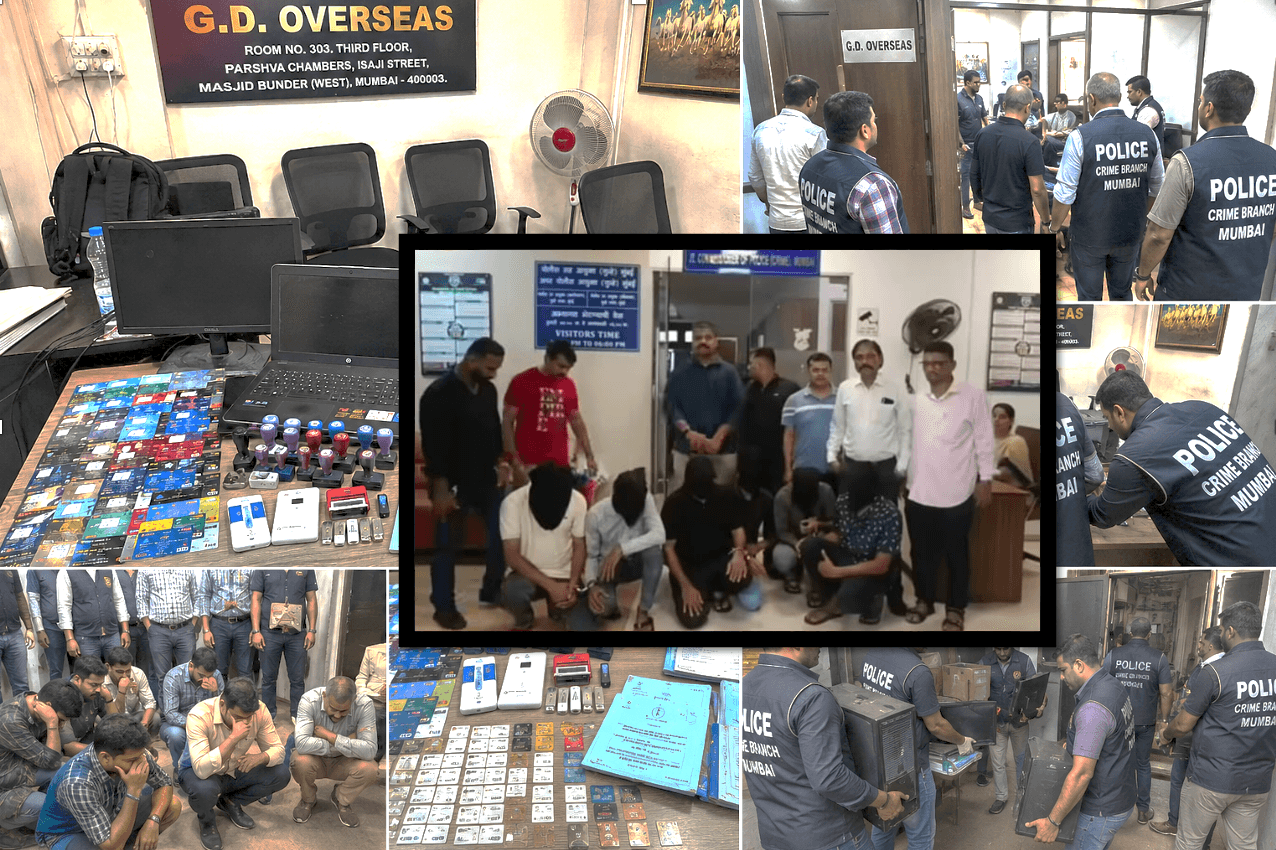
A team from DCB CID Unit-2 raided a small office in Masjid Bunder and caught the gang red-handed.
The Fake Company and the Raid
The gang was operating from a rented office under the name G.D. Overseas at Room No. 303, Third Floor, Parshva Chambers, Isaji Street, Masjid Bunder (West), Mumbai.
They were opening new current accounts in different banks across Mumbai and getting fresh SIM cards.
After activating everything, they sent the SIM cards to Dubai.
These bank accounts, called mule accounts, were then used to receive and move money stolen through cyber fraud and fake online gaming apps.
On the day of the raid, police seized a large number of items from the office and the accused.
Names of All Accused
Here are the six people arrested:
- Mohammad Shabbir Abdul Karim Sheikh, 42 years, businessman R.T. Flat No. 902, Rehmaniya Castle Building, Nishanpada, Khadak, Dongri, Mumbai
- Chirag Mohanlal Chavda, 26 years, garments business R.T. Room No. 101, H Wing, O.M. Residency, near Mazgaon Court, Mazgaon, Mumbai
- Bhavesh Hirji Maheshwari, 29 years, garments business R.T. Room No. 101, H Wing, O.M. Residency, near Mazgaon Court, Mazgaon, Mumbai
- Rohan Mohanlal Chavda, 28 years, businessman R.T. Room No. 101, H Wing, O.M. Residency, near Mazgaon Court, Mazgaon, Mumbai
- Vishal Premji Maru, 22 years, garments business Room No. 101, H Wing, O.M. Residency, near Mazgaon Court, Mazgaon, Mumbai
- Govind Virji Buchiya, 28 years, businessman R.T. Room No. 101, H Wing, O.M. Residency, near Mazgaon Court, Mazgaon, Mumbai
Five of the accused were staying at the same address in Mazgaon.
Police say this was their main base for the operation.
Modus Operandi – How the Gang Worked
This is how the gang carried out the crime:
- They opened new current accounts in various banks in Mumbai using documents that were either fake or arranged through middlemen.
- At the same time, they bought new SIM cards from different mobile companies.
- They activated both the bank accounts and the SIM cards.
- The activated SIM cards were then sent to Dubai.
- These bank accounts (mule accounts) and SIM cards were handed over to the operators.
- The accounts were used to receive money from victims of cyber fraud and fake online gaming/betting apps.
- Once the money came in, it was quickly transferred to other accounts to hide the trail.
- The SIM cards sent to Dubai helped the main operators (likely based in Dubai) to contact victims in India, receive OTPs, and run the fraud without getting caught easily.
This model is very common in big cyber fraud syndicates.
By using Indian mule accounts and Indian SIM cards, the real masterminds sitting abroad stay safe while the local gang does the dirty work of opening and supplying the accounts.
Items Seized by Police
During the raid, police recovered:
- 66 ATM cards
- 2 Lenovo computers
- 1 Canon colour printer
- 12 SIM cards of different companies
- 15 bank passbooks
- 122 cheque books of various banks
- 2 pen drives
- 68 rubber stamps of different companies
- Many bank account opening forms
- Electricity bills
- Company registration certificates and other documents
These items show the gang was running a well-organized setup to open and manage multiple mule accounts at scale.
Police Team Behind the Operation
The successful raid and arrests were carried out under the leadership and guidance of:
- Shri Deven Bharti, Police Commissioner, Brihanmumbai
- Shri Anil Kumbhare, Joint Police Commissioner (Crime)
- Shri Krishn Kant Upadhyay, Additional Police Commissioner (Crime)
- Shri Raj Tilak Roshan, Deputy Police Commissioner (Detection)
- Shri Dinkar Shilawate, Assistant Police Commissioner, D-South
The operation on the ground was led by Police Inspector Dilip Tejnkar, in-charge of Crime Branch Unit-2 (DCB CID, Unit-2), along with his team:
PSIs / Team members: Prashant Gavde, Sheikh, Borse, Thitame, Gharat Jadhav, Saiyyad Avhad, Constable Ghatol, Shinde and Kalsane.