Can the Police Read Your Messages? Inside the 2026 Global Fight Over Encryption
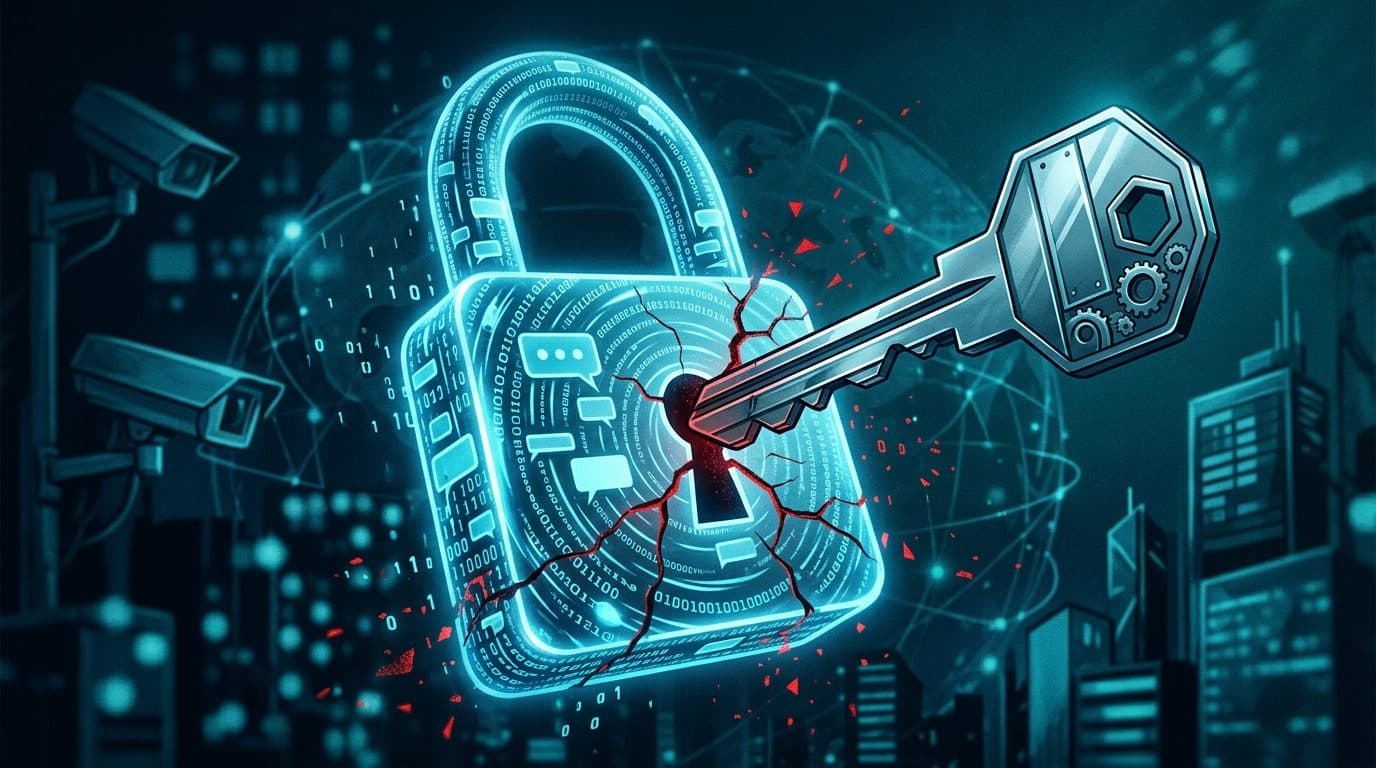
Apple pulled iCloud encryption in the UK, the EU's Chat Control retreated, WhatsApp fights India's traceability rule: inside the 2026 war over encryption backdoors.
End-to-end encryption is the quiet machinery of modern life. It scrambles your WhatsApp messages, your iMessages, your iCloud backups so completely that not even the company running the service can read them — which means neither can a hacker, a hostile government, or your own. Roughly three billion people rely on it daily. And in 2026, governments on three continents are fighting harder than ever to break it.
The argument is as old as cryptography: encryption that police cannot bypass also shields criminals, terrorists, and child abusers. The counter-argument is just as old, and mathematically stubborn: a backdoor built for law enforcement is a backdoor for everyone. What is new is how far the fight has escalated — from white papers to binding legal orders, secret demands, and companies threatening to pull their products out of entire countries.
What is actually at stake
It helps to separate two kinds of data, because the encryption fight is really about only one of them. Metadata — who messaged whom, when, from which IP address — is generally not end-to-end encrypted, and law enforcement can already obtain it through the platforms’ own request portals. (We cover exactly how in our platform-by-platform guide to law-enforcement data requests.)
The battle is over content — the actual words inside the message, the photos in the backup. With true end-to-end encryption, that content is unreadable to anyone but the sender and recipient. There is no lock for police to open, because no key exists to hand over. To give governments access, a provider has to engineer one into the system — and that engineered weakness is the whole controversy.
The United Kingdom: a secret order, and Apple blinks
The most dramatic move came from London. In early 2025 the UK Home Office reportedly served Apple a Technical Capability Notice under section 253 of the Investigatory Powers Act 2016 — a secret order, accompanied by a gag, demanding the ability to access data protected by Apple’s Advanced Data Protection (ADP), its strongest end-to-end encrypted iCloud tier. Reporting indicated the demand sought access to encrypted data globally, not just in Britain.
Apple’s response was startling: rather than build a backdoor, it withdrew Advanced Data Protection from the United Kingdom for new users, and told existing users they would have to turn it off. Apple chose to make UK users less secure in the open rather than secretly compromise the feature for everyone.

The order is now in court. Privacy International and Liberty, joined by Apple, are challenging the regime before the Investigatory Powers Tribunal, which issued a public judgment in April 2025 and set a multi-day hearing for early 2026. WhatsApp — whose head, Will Cathcart, submitted evidence warning the order set “a dangerous precedent” — sought to intervene but was refused permission to formally join; it continues to oppose the demand publicly. Both WhatsApp and Signal have said they would leave the UK rather than weaken their encryption.
The European Union: “Chat Control” retreats — partly
Brussels has spent years on a child-sexual-abuse regulation that critics nicknamed “Chat Control.” Its most feared element was a mandate for client-side scanning — software on your device that inspects messages before they are encrypted, which security experts argued was a backdoor by another name.

In a significant retreat, a compromise text under the Danish presidency in late October 2025 dropped the compulsory scanning of encrypted messages. But the regulation did not disappear. It preserves risk-mitigation duties and, most contentiously, age-verification obligations that could push platforms toward identity or face checks for ordinary users — and it leaves the door open to voluntary scanning. The credibility of age verification took a public hit when the EU’s own age-check app was reportedly hacked within minutes of release. Negotiations continue, with agreement targeted for 2026.
India: the “first originator” problem
India’s pressure point is traceability. Rule 4(2) of the IT (Intermediary Guidelines) Rules, 2021 requires large messaging services to enable identification of the “first originator” of a piece of information when ordered. WhatsApp challenged the rule in the Delhi High Court, arguing it cannot identify an originator without breaking end-to-end encryption for every message sent in India — and that doing so violates the constitutional rights to privacy and free speech affirmed in Articles 19 and 21.
WhatsApp’s position has been blunt: told to break encryption, “WhatsApp goes.” The litigation has been folded into a broader batch of challenges to the IT Rules, and the core question — whether traceability can be engineered without dismantling encryption for everyone — remains unresolved before the courts.
The United States: the long “Crypto War”
Washington has fought this battle since the 1990s, when the government tried to mandate the “Clipper Chip.” The FBI’s “going dark” argument — that encryption is blinding investigators — recurs in every Congress, most recently around proposals that would pressure platforms to scan for illegal content. No federal law currently forces a backdoor, and the security community, led by groups like the Electronic Frontier Foundation, continues to argue that any mandated weakness would be exploited by the very adversaries it is meant to stop — a warning underscored by recent state-linked breaches of telecom wiretap systems.
The dilemma that will not resolve
Every government in this fight invokes the same justifications — child safety, terrorism, organised fraud — and they are real. But the technical objection has never been answered: a backdoor cannot tell the difference between a good guy and a bad guy. A key that lets British or Indian police read messages is a key that can be stolen, subpoenaed by an authoritarian regime, or discovered by criminals. As security researchers put it, there is no such thing as a vulnerability that only the “right” people can use.
That is why the corporate responses have been so absolute: Apple pulling a feature rather than weakening it; WhatsApp and Signal threatening to exit markets. For them it is not posturing but architecture — once a backdoor exists, the product’s core promise is gone everywhere, not just where it was ordered.
What it means for investigators — and for you
For law enforcement, the practical takeaway is the one our reporting keeps returning to: in an end-to-end-encrypted world, the reliable evidence is metadata and preservation, obtained lawfully through the platforms’ law-enforcement request portals — not message content that, by design, no one can unlock.
For everyone else, 2026 is the year the abstract debate became concrete. Whether you can keep a backup or a chat that no one — not Apple, not your government, not a hacker — can read is now being decided in tribunals in London, trilogues in Brussels, and a courtroom in Delhi. The outcome will shape the privacy of billions who will never read the rulings.
Sources
- UK Investigatory Powers Act 2016, s.253 (Technical Capability Notices); Investigatory Powers Tribunal proceedings, 2025–2026.
- Apple — Advanced Data Protection availability in the United Kingdom.
- Privacy International — PI & the Apple TCN challenge.
- Electronic Frontier Foundation — analysis of the EU Chat Control regulation.
- India IT (Intermediary Guidelines and Digital Media Ethics Code) Rules, 2021, Rule 4(2); WhatsApp LLC v. Union of India, Delhi High Court (as reported by LiveLaw).