'You Are Under Digital Arrest': How Fake Police Video Calls Are Stealing Crores From Indians
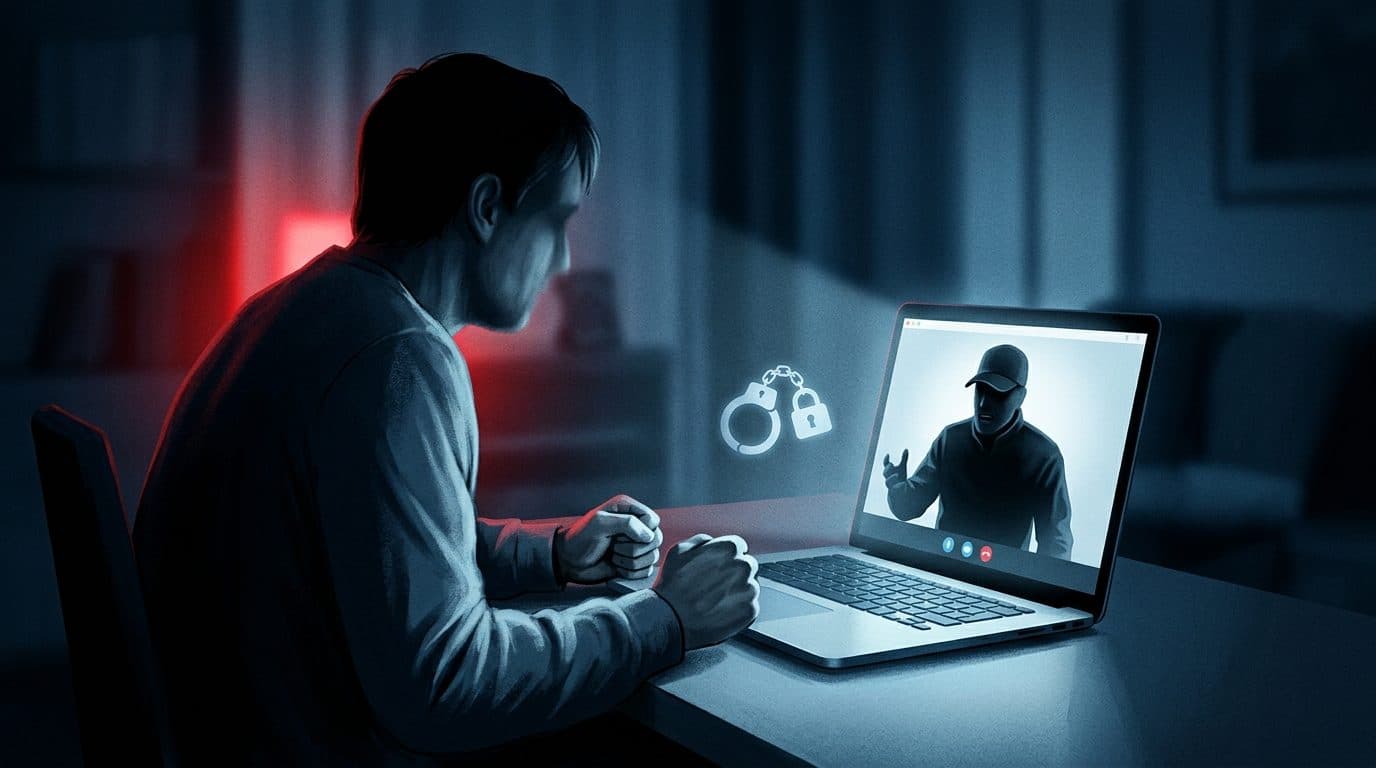
Scammers posing as police and CBI officers are digitally arresting Indians over video calls and draining their savings. How it works, and how to beat it.
The phone rings. A stern, official voice says there is a serious problem — a parcel in your name has been seized with drugs inside, or your bank account is linked to money laundering. The call switches to video, and a man in what looks like a police uniform, sitting in what looks like a police station, tells you that you are now under “digital arrest.” You must not hang up. You must not tell anyone. You must stay on camera until your “innocence” is verified. Over the next hours, terrified and isolated, ordinary people have transferred their entire life savings. It is one of the most damaging scams in India today — and it is built entirely on fear.
There is no such thing as “digital arrest” in Indian law. No law permits anyone to be arrested over a video call. No genuine Police, CBI, ED, or RBI officer will ever video-call you to demand money or to make you “verify” your funds. If it is happening, it is a scam — full stop. Hang up.
How the trap is built
Digital-arrest crews are not improvising; they run a practised script. Criminals impersonate law-enforcement, cybercrime investigators, customs, couriers, or bank officials, using spoofed official numbers, fake ID cards, real-looking uniforms, and backdrops staged to resemble a police station. The operation typically moves through four stages:
- The hook. A call or recorded message: a parcel seized, a SIM misused, an account flagged for laundering. Something alarming, and apparently official.
- The handover. You are “transferred” to a senior officer on video — the uniform, the badge, the station backdrop — who formally places you under “digital arrest.”
- The isolation. You are ordered to stay on the call, told that telling family would make you an accomplice. Cut off from anyone who might see the scam instantly, you keep obeying.
- The extraction. Relentless pressure — arrest is “imminent” — until you transfer money to “verify” your innocence or pay “bail,” often across several transactions over hours or days.
Why it works on intelligent, careful people
This scam doesn’t target the gullible — it targets the law-abiding. The threat of arrest, the appearance of authority, and the demand for secrecy hijack rational thought and replace it with panic. Retired professionals, business owners, and senior citizens have all been caught, precisely because they take a “police” accusation seriously and don’t want to involve family in something “official.” The isolation is the engine of the whole con: one outside opinion would end it in seconds, which is exactly why the scammers forbid it.
The cost
The losses are staggering. Indians lost an estimated ₹2,140 crore to digital-arrest fraud over an 18-month period, and 2025 saw a sharp escalation — cities like Mumbai reported roughly a 33% spike, with about ₹155 crore stolen in that city alone. Each of those figures is thousands of individual evenings that began with a ringing phone.
How to protect yourself and your family
- Hang up. The instant anyone says you are under “digital” or “online” arrest, end the call. It is fake.
- Never transfer money to prove innocence. No real investigation in India works that way.
- Never share OTPs, bank details, or your screen. Refuse every remote-access or screen-sharing request.
- Break the isolation immediately. Call a family member or friend. Scammers ban this because a second pair of eyes ends the con.
- Warn the vulnerable. Tell elderly relatives this scam exists before it calls them — forewarning is the strongest defence.
- Report fast. Call 1930 and file at cybercrime.gov.in. Reporting within the first 24 hours gives the best chance of freezing and recovering the money.
Frequently asked questions
Can the police really arrest someone over a video call?
No. “Digital arrest” does not exist in Indian law. Arrests follow legal procedure in person; no agency conducts them by webcam or demands money to avoid one.
The number looked like a real police/CBI number. Doesn’t that prove it’s genuine?
No — caller IDs are trivially spoofed. A familiar-looking number, a uniform, and an ID card are all easy to fake and prove nothing.
I already paid. What now?
Act within the “golden hour”: call 1930, file at cybercrime.gov.in, and tell your bank to freeze the account immediately. See our guide on what to do right after a scam.
The bottom line
Digital-arrest scams win by overwhelming people with panic before they can think. The defence is simple to state and hard to do under pressure: slow down, remember that no agency in India arrests anyone by webcam, and reach out to one real person you trust. That single phone call to a friend is worth more than any amount the scammer claims you owe.