Sri Lankan Police Raid Panadura Hotel Housing 32 Chinese Nationals in Suspected Online Fraud Probe
After Cambodia, Has Sri Lanka Become the Scam Networks' New Home?
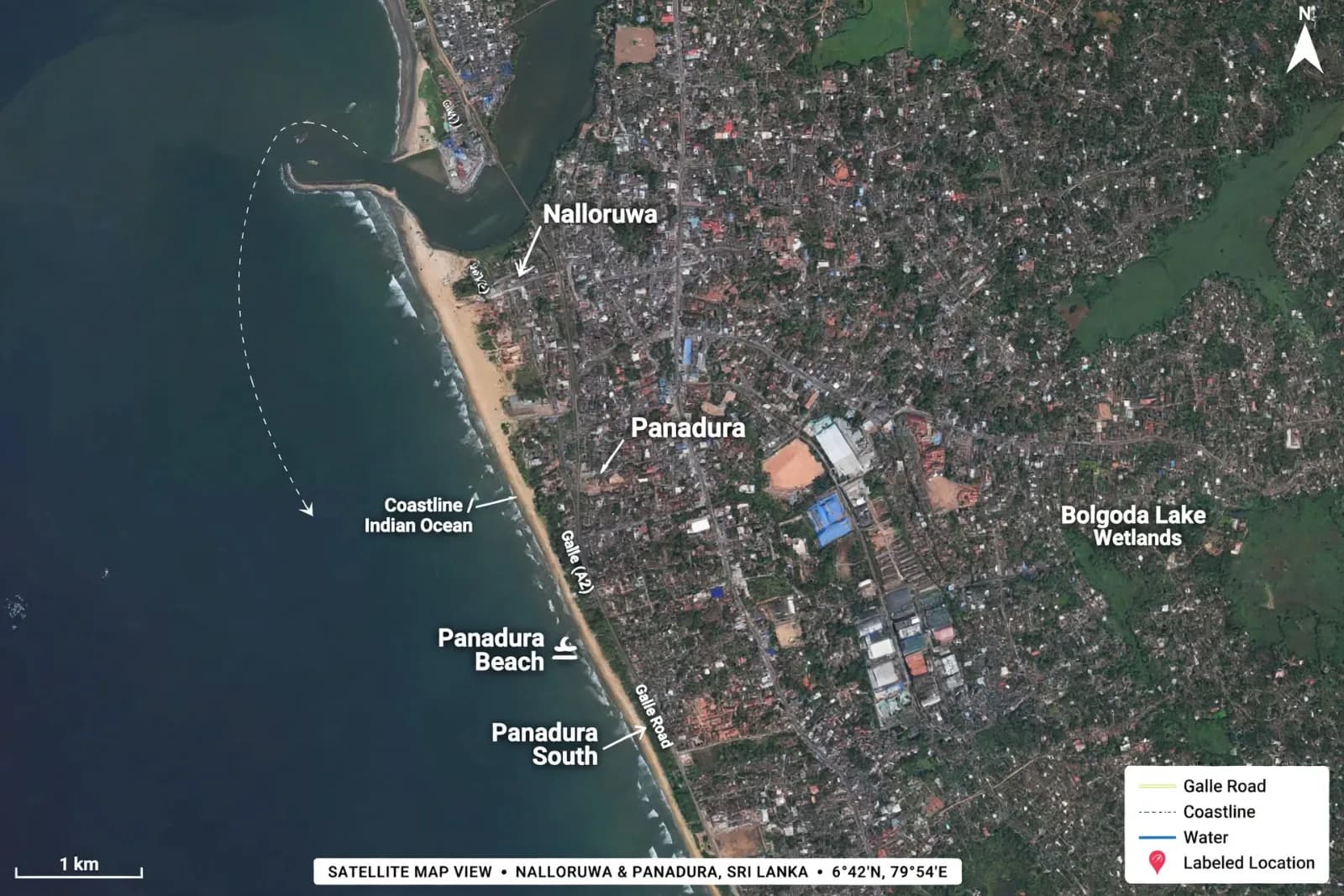
PANADURA, Sri Lanka, On 6 and 7 November 2026, officers from the Panadura Division Criminal Investigation Unit, backed by the Criminal Investigation Department, Special Task Force, Criminal Records Division, Police K-9 unit and the Department of Official Languages, searched a hotel in the Nalloruwa area under a warrant from the Panadura Magistrate’s Court. They found 32 Chinese nationals on the premises and seized 23 computers and related devices, which were taken to Panadura South Police Station for forensic examination.
The operation followed intelligence received by the Senior Superintendent of Police for the Panadura Division alleging illegal online financial activity. The Criminal Investigation Department has assumed control of the inquiry. Police statements emphasise that investigators are still determining whether any criminal offence was committed. No formal charges have been confirmed, and the 32 remain under investigation rather than convicted.

Sri Lankan authorities say they have recently uncovered multiple instances of foreign groups, often Chinese, operating from hotels, guesthouses and resorts. In one earlier Panadura operation in the Gorakana area, 20 Chinese nationals were remanded after a raid that yielded hundreds of phones, routers and other devices. Nationwide, police reported more than 1,000 foreign arrests linked to suspected cyber fraud between January and September 2026, a sharp rise from previous years. Travel records of many detainees show prior stays in Cambodia or Myanmar.
The pattern fits a larger regional shift. For years, large-scale online scam operations, pig-butchering romance and investment frauds, fake trading platforms and related schemes, were concentrated in fortified compounds in Cambodia and Myanmar, many run by Chinese organised networks and often staffed by trafficked or coerced workers. Facing sustained pressure, those hubs have been disrupted.
As compounds closed, operators and workers dispersed. China’s embassy in Colombo has publicly acknowledged that electronic fraud gangs previously active in Cambodia, Myanmar and elsewhere have moved to Sri Lanka, citing the island’s reliable internet, relatively accessible tourist visas and available long-stay accommodation. The embassy has stated support for local enforcement.
A hotel room or rented wing can serve as a temporary call centre or trading floor that can be vacated quickly. Groups book extended stays, bring or acquire computers and phones, and operate under the cover of tourism. Forensic examination is required to establish what the devices were used for, who the targets were and how funds moved. Presence of multiple computers alone does not prove fraud; investigators must demonstrate the activity and any victimisation.
Sri Lanka has so far recorded zero successful prosecutions for the core online scam offences in these cases, according to reporting by the Organized Crime and Corruption Reporting Project, with many suspects processed under immigration violations and deported. Outdated legal tools and the absence of local complainants have limited outcomes. The Global Initiative Against Transnational Organized Crime has warned that the country is at serious risk of becoming a hub for industrial-scale cyber scams.
Police have urged hotel owners to exercise due diligence on groups that book long stays, keep unusual hours or install substantial computer setups, and have asked the public to report suspicions via hotlines 118 or 119.
Whether the Nalloruwa hotel was a genuine operations base or a false alarm will depend on what the CID finds on the seized machines. What is already clear is that the same adaptable networks that once filled compounds in Cambodia and Myanmar are testing new ground in places with good connectivity and lighter scrutiny. Panadura is one data point in that migration.
Sri Lanka cannot wait for the next raid to find the next hotel. Proactive monitoring would mean connecting the dots that already exist: a real-time hotel guest registration system that flags bulk bookings, extended stays paid in cash, and groups arriving together with large amounts of computer equipment; immigration screening that looks at behaviour and travel patterns, not nationality alone, including short visa runs and repeat entries; and a shared alert system between Immigration, the CID, telecom regulators and banks so that a hotel booking, a surge in new SIM cards and a spike in overseas transfers can be seen as one pattern, not three separate files. It would also require faster forensic triage of seized devices, so investigators know within days, not months, whether a site was a scam operation, and a dedicated cyber fraud prosecution track so cases do not end as visa violations followed by deportation. If hotels are required to report, police are equipped to act quickly, and Sri Lanka shares intelligence in real time with China, Cambodia, Myanmar and Interpol, Panadura will not be a warning that was missed. It will be the case that changed how the country watches for the next one.