India Restricts Telegram Until June 22 Ahead of the NEET-UG Re-Exam
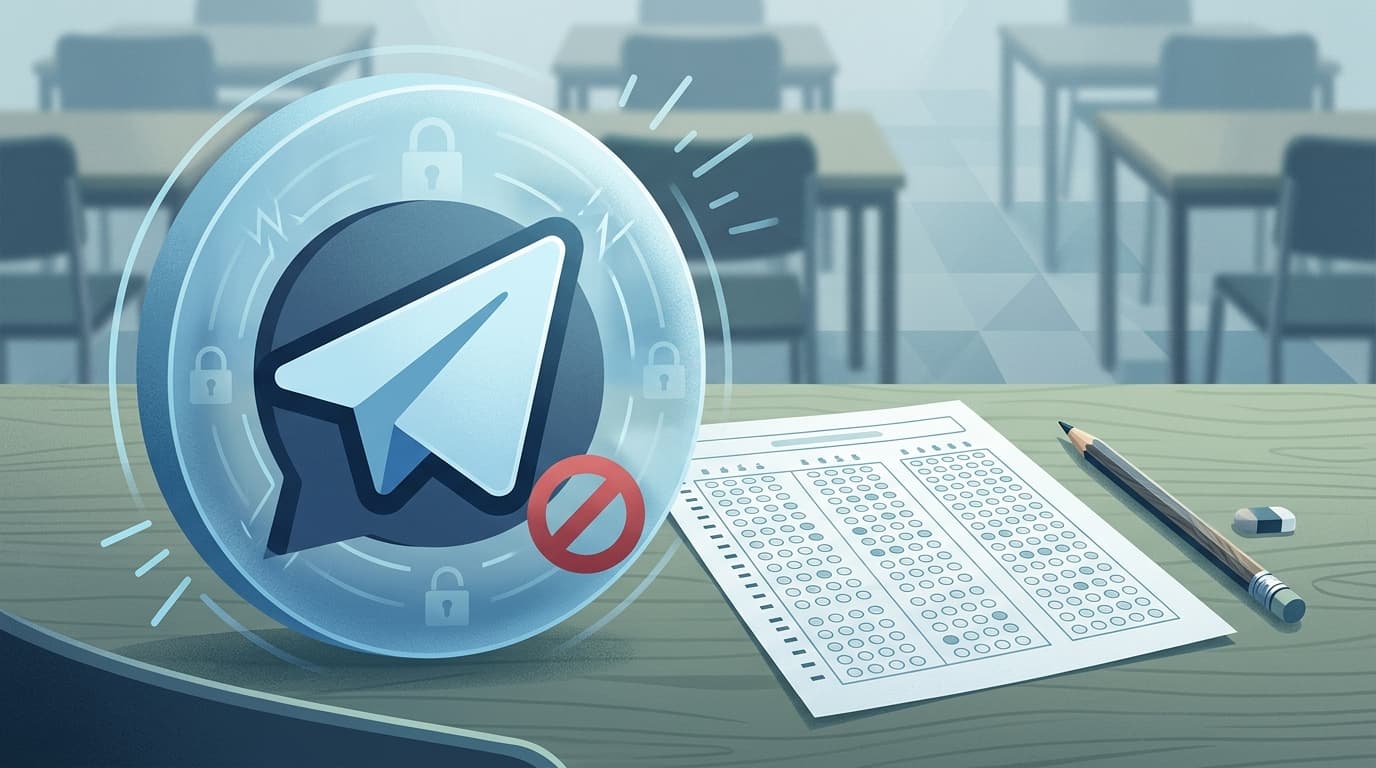
India temporarily restricted Telegram nationwide under Section 69A until June 22, ahead of the NEET-UG re-exam, as police busted fake 'paper leak' channels.
India has temporarily restricted access to Telegram nationwide in the run-up to the NEET-UG 2026 re-examination, an unusually broad use of the government's website-blocking powers aimed at the messaging channels being used to push fake "paper leak" claims at millions of medical aspirants. The restriction was reported to run until 22 June 2026, the day after the re-test, and arrives alongside a wave of cyber-fraud arrests in Gujarat and Rajasthan.
What the government did
According to reporting and the National Testing Agency's own statement, the Ministry of Electronics and Information Technology (MeitY) issued a direction under Section 69A of the Information Technology Act, 2000, restricting access to Telegram in India for a limited window tied to the re-examination. Section 69A is the same legal route the government uses to block apps and online content on grounds such as public order and the integrity of the state.
The NTA's statement adds that MeitY separately directed the platform to disable, in India, the message-editing feature for already-posted messages through 30 June, on the basis that the edit function had been used to fabricate after-the-event "paper leak" evidence. That message-editing direction is described in the agency's own statement; we attribute it to the NTA rather than state it as independently established fact. The access restriction itself, running until 22 June, is set out in the same NTA statement.
Why: the NEET "paper leak" panic
The NEET-UG exam sat by more than 2.2 million students on 3 May 2026 was cancelled on 12 May after investigators found overlaps between a pre-circulated "guess paper" and the actual question paper. With a re-test scheduled for 21 June, a fresh wave of Telegram channels began advertising that they were selling the re-exam paper in advance.
The NTA has repeatedly said there is no verified leak of the re-examination paper, calling the viral claims false and warning candidates not to engage with anyone claiming to sell question papers. It referred the suspicious channels to cybercrime authorities for verification and action.
The crackdown
Police have moved against the operators behind the claims. On 15 June, the Ahmedabad Cyber Police arrested operators who had run eight Telegram channels under the name "Private Mafia," falsely advertising that they held the re-NEET paper. Investigators traced about ₹1.5 crore moving through their bank accounts and estimate that more than 1,000 students were targeted, with dozens of confirmed victims. Officials stressed that no genuine question paper was recovered: the case is cyber fraud built on false claims, not an actual leak.
Separate arrests were made in Kota, Rajasthan, of people promising the paper through Telegram. The Central Bureau of Investigation continues to pursue the original 3 May leak, in which it has already named multiple accused.
A notable use of platform-blocking power
Restricting an entire mainstream messaging platform used by hundreds of millions, even temporarily, is a significant step rather than a routine one. Section 69A blocking is normally applied to specific URLs, accounts or apps; a time-boxed nationwide restriction tied to an examination is at the broad end of how the power is used, and it affects every legitimate user of the platform for the duration. The government framed the move as proportionate and strictly limited, with the NTA acknowledging the inconvenience to lawful users and saying the curb was confined to the period around the exam.
The episode underlines a recurring governance problem: encrypted, cross-border platforms with no local establishment are hard to compel quickly, so authorities reach for blunt, network-level tools when a deadline (here, an exam) leaves no time for slower legal process.
If you are a candidate
Treat every "leaked paper" offer as a scam. No verified re-exam paper is in circulation, and paying for one funds the exact fraud networks the police are arresting. Rely only on the official site neet.nta.nic.in and verified NTA channels for any exam update. If you have been solicited or defrauded, report it to the national cyber-crime helpline 1930 or at cybercrime.gov.in.
Sources
- NEET-UG official portal, National Testing Agency
- National Testing Agency (NTA), official website
- Ministry of Electronics and Information Technology (MeitY), the authority for Section 69A directions
- India Code: the Information Technology Act, 2000 (Section 69A)
- National Cyber Crime Reporting Portal (helpline 1930)