GST Theft & Cybercrime Convergence - accused arrested for 53 crore fraud using shell entities
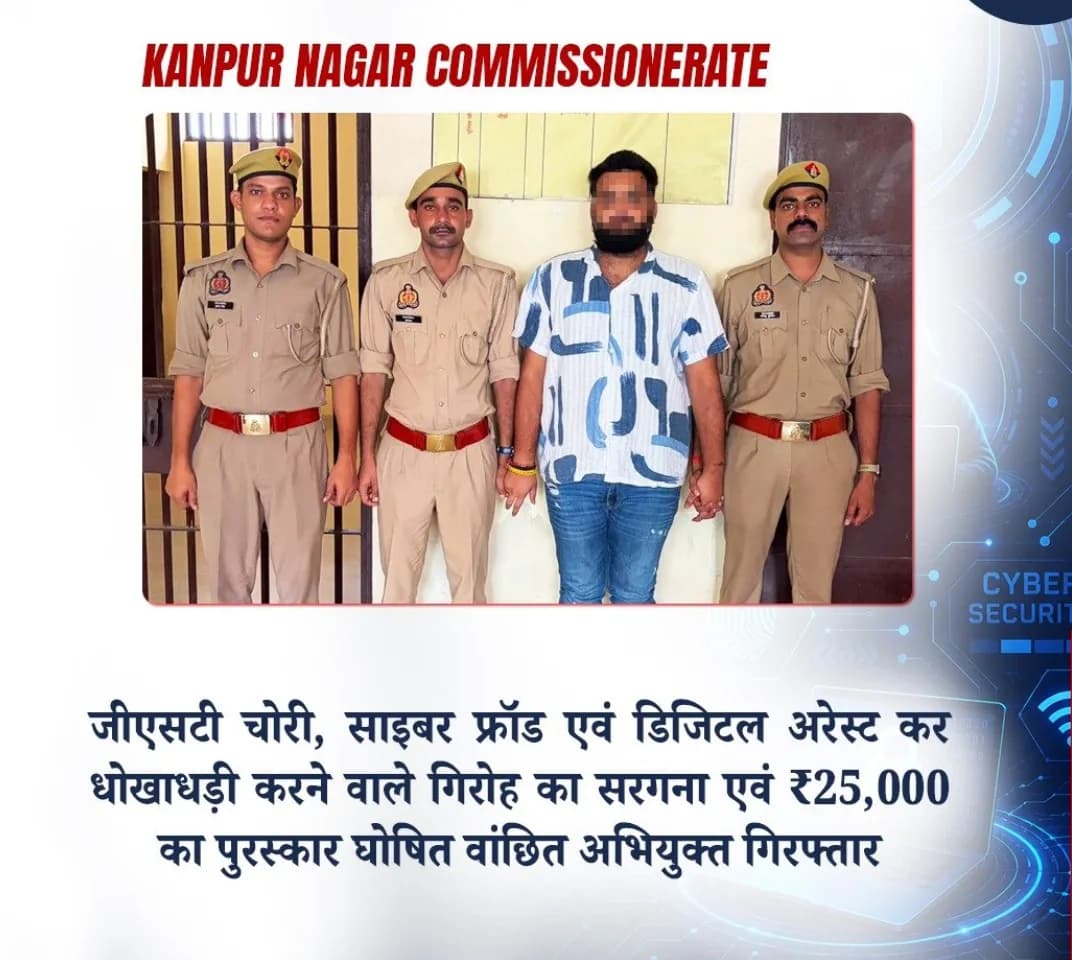
Goyal is linked to three allegedly fictitious firms—Rajaram Traders, Shree Shyam Traders, and Radha Traders—that recorded roughly ₹53 crore in transactions between early 2025 and April 2026. These were used both to claim fraudulent Input Tax Credit (ITC) & Cybercrime.
Kanpur Nagar Police have arrested Anchit Goyal (also referred to as Ankit/Anchit Goyal), a scrap dealer from Fatehpur Sikri in Agra carrying a ₹25,000 reward, in a significant crackdown linking cyber fraud, digital arrest scams, and GST-related tax theft.
The official Uttar Pradesh Police account highlighted the arrest of the gang’s key figure involved in GST theft (जीएसटी चोरी), cyber fraud, and digital arrest fraud. Goyal and associates allegedly channelled proceeds from cyber scams into bank accounts of fake firms, disposed of the funds, and converted black money into white. Documents recovered from mobiles pointed to multiple fictitious firms with evidence of large-scale GST irregularities and financial dealings. Transactions exceeding ₹60 crore were detected in accounts linked to these firms, while ₹4.12 crore belonging to other members had earlier been frozen. The mastermind reportedly lured young people with promises of quick money and a luxury lifestyle.

Media reports place this arrest within a broader Kanpur investigation into a cyber fraud network involving transactions running into hundreds of crores (with some accounts tracing around ₹250 crore overall). Goyal is linked to three allegedly fictitious firms, Rajaram Traders, Shree Shyam Traders, and Radha Traders, that recorded roughly ₹53 crore in transactions between early 2025 and April 2026. He allegedly procured fake GST invoices from scrap traders across Rajasthan, Uttar Pradesh, Madhya Pradesh, and Delhi. These were used both to claim fraudulent Input Tax Credit (ITC) and income-tax benefits and to present cyber-fraud proceeds as legitimate business activity.
The dangerous convergence of mule accounts and GST theft
Traditional mule accounts are ordinary (or rented/stolen) bank accounts used briefly to receive scam money before it is withdrawn or layered further. In this model, fake GST-registered firms elevate the technique. Cyber fraud proceeds (from digital arrests, investment scams, etc.) are routed into current or business accounts opened in the names of these shell entities. Fake invoices and e-way bills create a paper trail of “purchases” and “sales.” This allows operators to:
- Layer illicit funds through accounts that appear commercial and therefore attract less immediate suspicion.
- Claim fraudulent ITC, effectively extracting additional value from the tax system.
- Convert black money into seemingly legitimate “business” income that can be withdrawn, reinvested, or further moved.
- Exploit higher transaction limits typical of current/trust accounts.
The result is a hybrid crime: cyber proceeds are cleaned while simultaneous revenue loss is inflicted on the GST system. Detection requires simultaneous scrutiny of cyber complaint data (NCRP), bank transaction patterns, GST registration and return data, invoice trails, and physical verification of firms, exactly the coordination GST officers and cyber crime units must strengthen. Police recovered firm-related documents from the accused’s devices and are examining linked accounts, beneficiaries, and possible collusion. Earlier related actions in Kanpur had already targeted bank employees and other network members. The investigation continues into the full financial ecosystem.This case underlines why GST formations and cyber police must share real-time data on high-velocity current accounts, newly registered firms showing disproportionate turnover, and accounts receiving funds from known cyber complaint clusters. Fake firms used as sophisticated mule accounts represent one of the more effective contemporary methods of integrating cyber-fraud proceeds into the formal economy while simultaneously attacking tax revenues. Kanpur police’s action against the ₹25,000-reward accused demonstrates the value of persistent follow-up across cyber and economic offence verticals. GST officers monitoring ITC claims and e-invoice patterns, and cyber teams tracking mule flows, now have a clear operational illustration of how the two streams converge.