Amazon Law Enforcement Request Tracker (emea.ler.amazon.com): EU & UK Police Guide
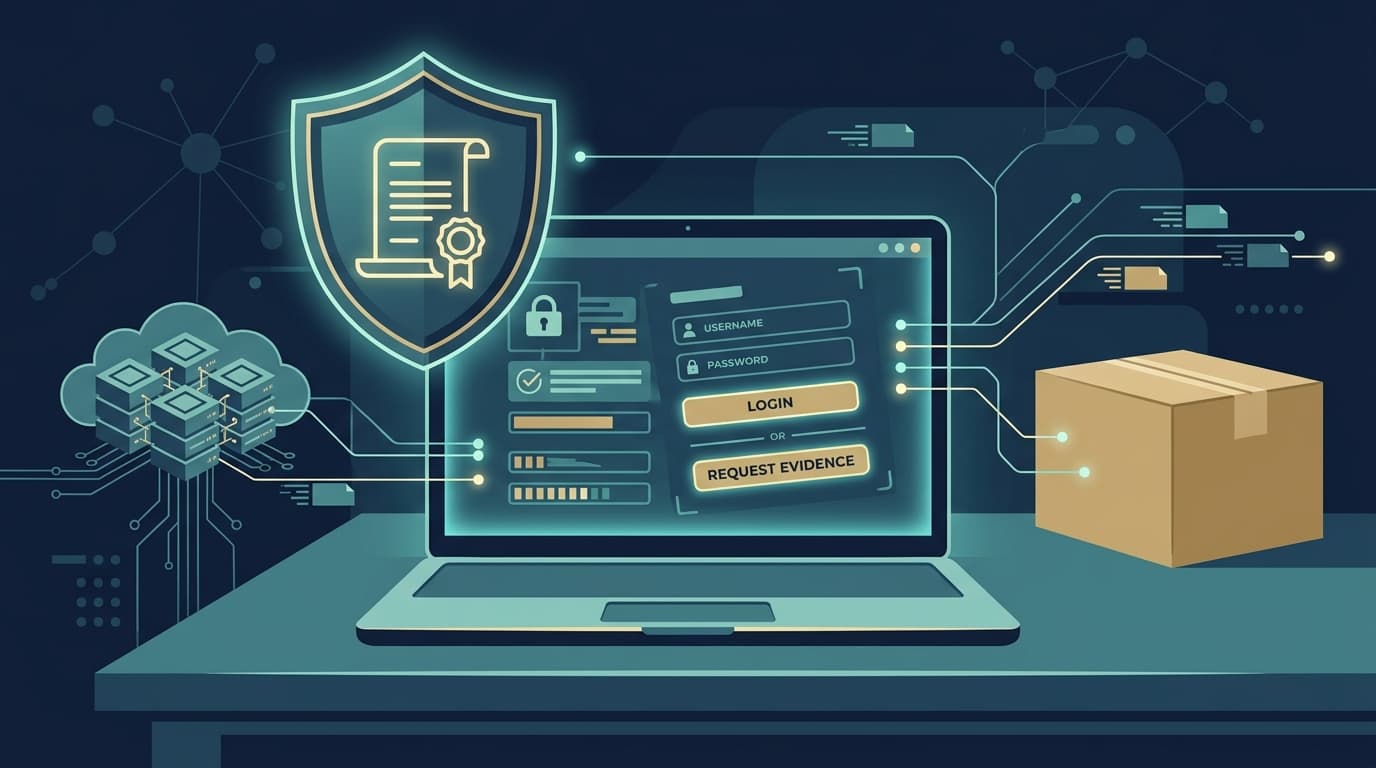
How EU and UK police submit requests to Amazon, AWS and Ring through the ALERT portal at emea.ler.amazon.com: legal process, emergencies and what data you get.
https://emea.ler.amazon.com/ is the EU and UK instance of the Amazon Law Enforcement Request Tracker (ALERT), the portal through which Amazon accepts legal process for Amazon.com, Amazon Web Services (AWS), Ring and Blink. US agencies use the sister portal at https://ler.amazon.com/us. This guide covers how EU and UK investigators file, what Amazon will and will not disclose, and the traps that cost cases, from AWS redirects to Blink footage that deletes itself. For authorised law-enforcement use only.
- Where: EU and UK law enforcement file at emea.ler.amazon.com; US agencies at ler.amazon.com/us. Create an individual account and upload the legal process.
- What you get: a subpoena or equivalent order returns non-content (name, address, email, billing, account creation date, certain purchase history). Content needs a search warrant or equivalent.
- Emergencies: use the portal's emergency request button; ALERT grants temporary account access during the emergency. Amazon publishes no emergency email or phone line.
- Portal problems: [email protected] (technical difficulties only, not for serving process).
Identifiers for a request
- Amazon retail account: the registered email address, order numbers and delivery addresses.
- Amazon devices: the device serial number. Amazon says it can help return lost or stolen Amazon devices when given the serial number.
- AWS: the IP address with a precise timestamp and time zone, plus the AWS account ID or resource identifier if known.
- Ring or Blink: the device owner's account email and the exact location and time window of the footage.
What Amazon provides
| Data | Examples (Amazon's wording) | Legal process |
|---|---|---|
| Non-content | Name, address, email, billing information, account creation date, certain retail purchase history, AWS service usage | Subpoena or other valid and binding demand |
| Content | Files stored in a retail account (such as photos); for AWS, customer-uploaded content and computational results; for Ring, video and customer-service call recordings | Search warrant or equivalent |
- Preservation: Amazon preserves for up to 90 days. Ring preserves for 90 days with one 90-day extension, 180 days in total.
- User notification: Amazon notifies the customer before disclosing content, unless it is prohibited from doing so or has a clear indication of illegal conduct.
AWS-hosted data: expect a redirect
AWS uses the same ALERT channel, but content hosted on AWS belongs to the AWS customer. AWS says that if it receives a legally valid and binding request for enterprise customer content, it "will use every reasonable effort to redirect law enforcement to the customer". In practice AWS mainly returns account and billing data: in the first half of 2026, just 1 of 2,310 AWS requests resulted in content disclosure. To reach a server's content, serve the customer that operates it. See our guide to cloud evidence from AWS, Azure and Google Cloud.
Ring and Blink: move fast
Ring's own guidelines direct all EU and UK law enforcement to the ALERT EU portal. Blink, also Amazon-owned, deletes cloud video automatically after 30 days in the UK and Europe (60 days in the US, Canada, Mexico, Australia and New Zealand), and says this "is not and can not be interrupted by the submission of a data preservation request, subpoena, or search warrant." If Blink footage matters, secure it from the owner's device or account immediately. Our guide to chain of custody and preservation requests covers how.
EU e-Evidence rules now apply
The EU e-Evidence Regulation (EU) 2023/1543 has applied since 18 August 2026, and the accompanying Directive (EU) 2023/1544 on legal representatives since 18 February 2026. A European Production Order must be answered within 10 days, or 8 hours in an emergency. Amazon has not published how ALERT handles European Production Orders, so confirm the route with Amazon before relying on one. The UK is not part of the e-Evidence regime.
Outside the EU and UK
Amazon has confirmed portals only for the US (ler.amazon.com/us) and the EU and UK. No dedicated portal for India or Asia-Pacific has been published, even though India is Amazon's single largest source of government requests: 9,147 in the first half of 2026. Agencies elsewhere should confirm the correct channel through [email protected], and cross-border requests for content may still need a mutual legal assistance request. Our explainer on MLAT vs LERS vs Interpol helps choose the channel.
Amazon's 2026 transparency figures
Amazon's Government Request Report for January to June 2026, renamed from the Information Request Report, counts 28,601 requests for Amazon excluding AWS (99.02% for non-content) and 2,310 for AWS. The top origins for Amazon were India (9,147), the US (4,847), Germany (4,403), Spain (2,789) and the UK (1,996). The report no longer breaks requests down by subpoena, warrant or court order.
What you'll need
- An individual ALERT account on the right regional portal.
- Valid and binding legal process from your jurisdiction, uploaded through ALERT.
- Precise identifiers and a narrow time range; AWS challenges requests it considers overbroad.
- For emergencies, a clear statement of the threat to public safety or risk of harm to a person. See our guide to emergency disclosure requests.
For Amazon's US process and the full breakdown across retail, AWS and Ring, see our Amazon, AWS and Ring law enforcement guide. For every other platform, visit the LERS portal hub or the platform-by-platform LERS guide.
Sources: Amazon Law Enforcement Guidelines · Ring Law Enforcement Guidelines · Blink data preservation · AWS CLOUD Act · Amazon Government Request Report H1 2026 · European Commission: e-Evidence